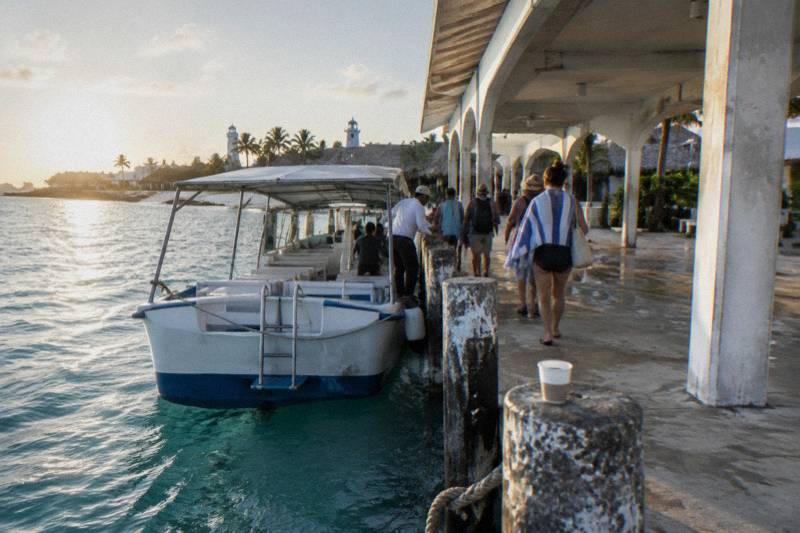
Wildlife And Sea Turtles On Isla Contoy
Isla Contoy is a national park and bird sanctuary first and a beach second. Here is what lives there, when the turtles nest, and what a day trip can show you.
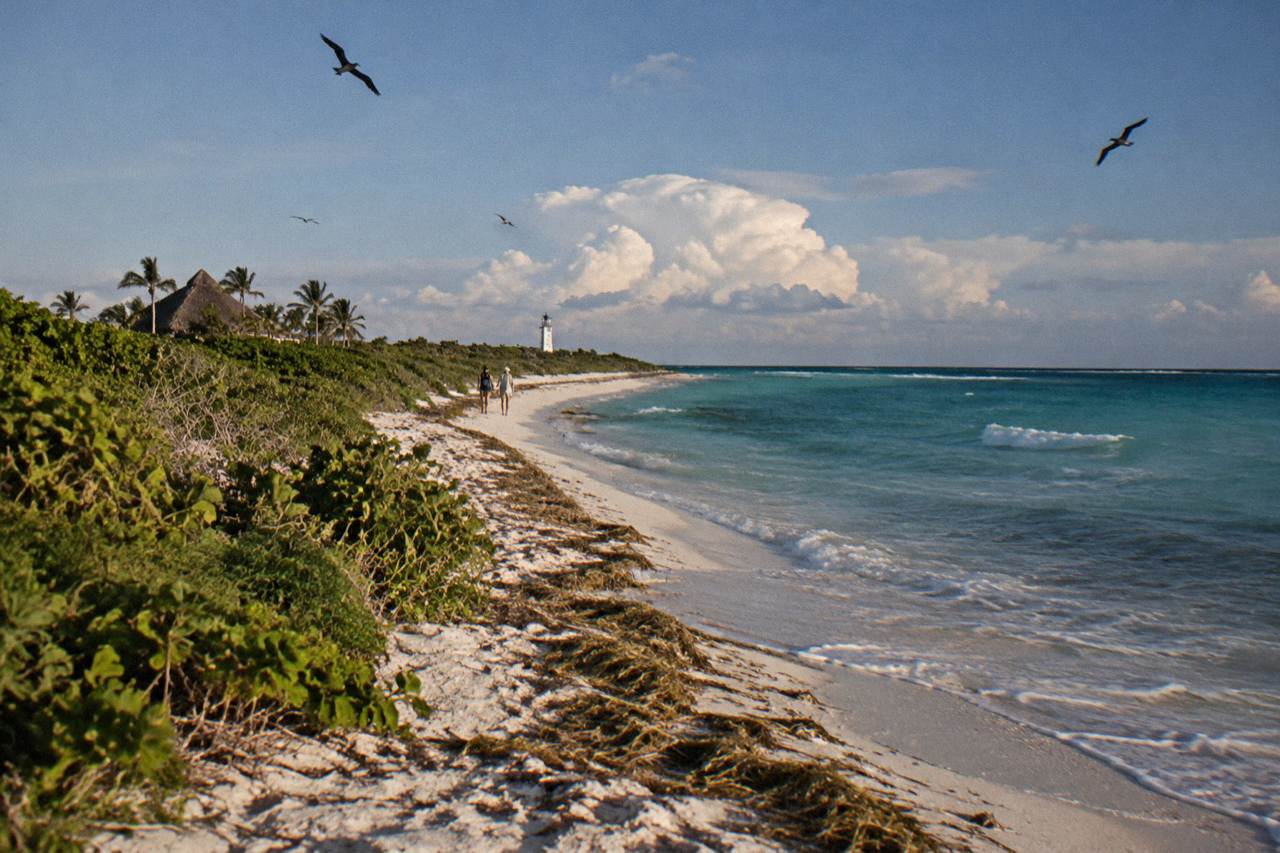
Short answer
Isla Contoy protects well over 150 recorded bird species, including Mexico's only red-footed booby nesting colony, and its sanctuary beaches host three regular nesting turtle species, hawksbill, loggerhead and green, with occasional leatherback records. Nesting runs roughly April or May to September or October. Access is by authorized boat day only, about 200 visitors a day.
Isla Contoy exists as a protected area because of its animals, not despite them. The island was decreed a national park in 1998 across 5,126 hectares, and the surrounding Santuario Playas de Isla Contoy was set aside specifically as a turtle nesting sanctuary. The result is one of the strangest landscapes on the Cancun shelf: an uninhabited sand and mangrove island, capped by seabird colonies, with no hotels, no ferry and about 200 visitors a day at most. Every trip reviewed on Isla Contoy Tours reaches this place through authorized operators, and every operator works inside the same park rules, which exist to keep the birds nesting and the turtles coming back.
This guide lays out what the park actually protects, season by season and species by species, and then connects it to the boat days that reach those habitats. It pulls from the official CONANP park listing, the sanctuary management program, and the listing details of the tours themselves. Where a fact is secondary, like the rough turtle nesting window, it says so. Where something cannot be promised, like a specific sighting, it says that too.
What Wildlife Lives On Isla Contoy?
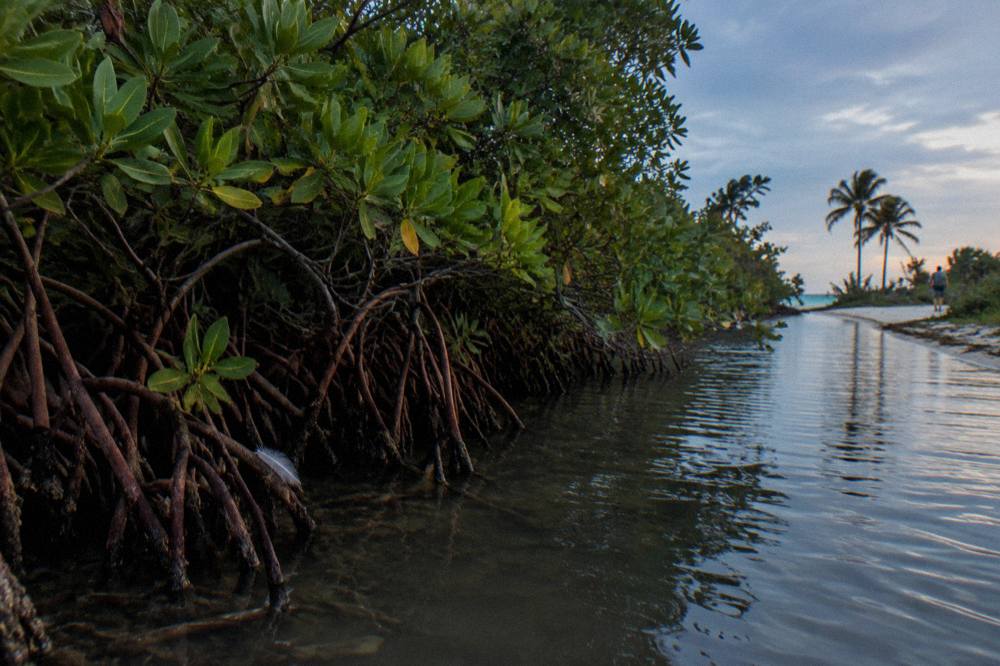
The island and its surrounding waters shelter well over 150 recorded bird species, three nesting sea turtle species, American crocodiles in the lagoons, black spiny-tailed iguanas on the dunes, and reef fish along the Ixlache barrier reef. The national park decreed in 1998 covers 5,126 hectares, and a separate beach sanctuary protects the nesting coastline. Nothing here is a zoo exhibit, so every sighting depends on season, weather and luck.
The core of the island's wildlife story is the mangrove and lagoon system in the interior, flanked by coastal dunes and a shallow lagoon where crocodiles are reported by the Ramsar information sheet for the site. BirdLife International treats Isla Contoy as an Important Bird and Biodiversity Area, which is the designation that matters most here: the island's colonies of magnificent frigatebird, brown pelican, double-crested cormorant, brown booby, red-footed booby and royal tern are the reason the IBA exists. Park-affiliated operators cite about 173 species overall, the eBird hotspot list for the island records 183, and older Ramsar and CONANP reports counted roughly 151, which is why the sensible phrasing is "well over 150 recorded species" rather than a single precise figure.
The nesting beach sanctuary is the second half of the story. The management program for the Santuario Playas de Isla Contoy names three turtle species that nest on these beaches: hawksbill, loggerhead and green, plus occasional leatherback records. Green turtles in particular show high hatching success in regional reporting. None of this is visible from a sun lounger, because there are no sun loungers; the wildlife is the point of the whole management regime, from the marked trails to the ban on sunscreen. Whether a day trip gives you any real chance of spotting one is the natural next question, and the facts about sea turtles on Isla Contoy answers it plainly.
Marine life wraps around it all. The Ixlache reef lies south of the island and is part of the Mesoamerican Reef system, and manta rays are reported in the surrounding waters, as are whale sharks during their summer aggregation north of Isla Mujeres. Those latter animals are never part of a Contoy day trip, a distinction covered in detail on the whale shark season page.
Which Seabird Colonies Nest On Isla Contoy?
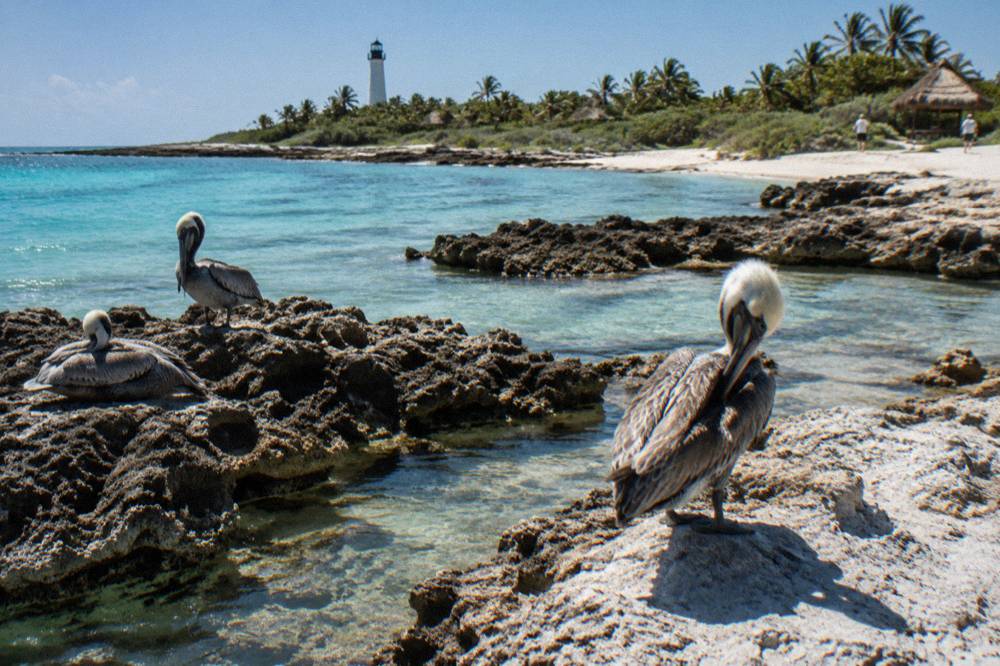
Six seabird species form the main colonies: magnificent frigatebird, brown pelican, double-crested cormorant, brown booby, red-footed booby and royal tern. The red-footed booby colony is described by operator sources as the only nesting colony in Mexico, which makes Isla Contoy the single place in the country where that species raises its young. Frigatebird courtship and nesting is reported roughly November to April.
The frigatebird colony is the island's signature sight. These are large, dark seabirds with a wingspan that makes them unmistakable when they circle over the mangroves, and the males inflate a red throat pouch during courtship. Operators that run trail walks describe thousands of individuals in the colony, one of the largest in the region. Because the birds nest in the mangroves and scrub, the marked trail system with a mandatory guide is the only way to see them properly; wandering off-trail is prohibited and would disturb the colony anyway.
The boobies split the habitat differently. Brown boobies nest on the island as residents, and the red-footed booby holds its Mexican nesting foothold here, with both white and brown color morphs reported. Pelicans and cormorants fish the shallows around the island all year, and royal terns nest in colonies of hundreds, with nesting reported around March to July. Most of these species are resident, which is why a visit in any month can produce a good bird list, but the peak of courtship and nesting activity across the colony tends to fall in the calmer, drier months.
| Species | Status on Isla Contoy | Reported seasonal note |
|---|---|---|
| Magnificent frigatebird | Major nesting colony, resident | Nesting roughly Nov to Apr |
| Red-footed booby | Only nesting colony in Mexico, per operator sources | Peak activity roughly Nov to Mar |
| Brown booby | Nesting resident | Present all year |
| Brown pelican | Significant nesting colonies, resident | Peak activity roughly Dec to Apr |
| Double-crested cormorant | Abundant resident | Present all year |
| Royal tern | Important nesting site | Nesting reported roughly Mar to Jul |
The species count matters for planning because the birdwatching happens on foot. Trail walks are led by certified guides, and several listings build the guided island tour into the day, including the eco adventure from Punta Sam and the national park eco-tour from Isla Mujeres. If birds are the main reason for your trip, the dedicated Isla Contoy birdwatching guide breaks down what each departure style offers.
Of those three, the eco adventure run by Contoy Adventures is the most bird-forward shared day: from $140 per person, 4.3 from 209 reviews, with two and a half hours on Contoy including a guided tour, a stop at Ixlache reef for 30 minutes of snorkeling, and an open bar on the boat. The Snorkel Day, 8 Hours from Ocean Tours Mexico is the most reviewed boat day here, 4.8 from 829 reviews, from $179 per person, with 3 hours in the national park section of its itinerary. Look at the National Park, Optional Snorkel if a shorter, Isla Mujeres-based day suits you better; the eco-tour format there is the Isla Mujeres departure option that keeps the driving to a minimum.
When Do Sea Turtles Nest On Isla Contoy?
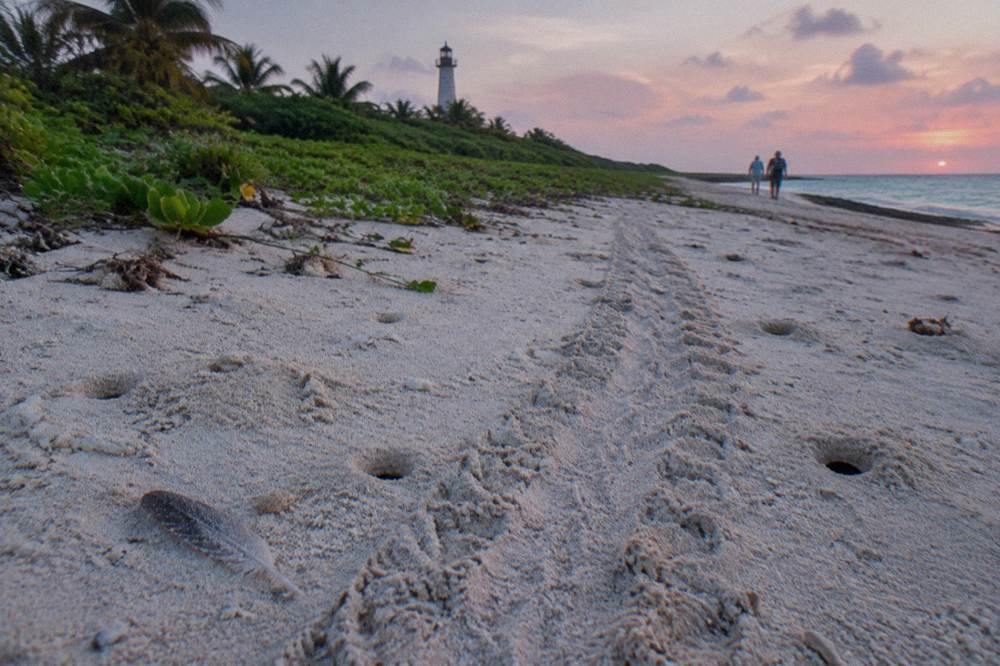
Three species nest on the sanctuary beaches: hawksbill, loggerhead and green, plus occasional leatherback records, per the management program. Nesting is reported roughly from April or May through September or October, with the warmer months as the peak. Hatchling emergence follows the clutch timing, but public hatchling-viewing windows do not exist as a bookable product, so no tour can promise them.
The sanctuary designation is not decorative. The management program for the Santuario Playas de Isla Contoy, a 279-page CONANP document, zones the beaches specifically around nesting density and restricts lighting, fires, waste and any disturbance near the nesting areas. Green turtles in particular are reported to account for a striking share of regional hatching success on these beaches. That success depends entirely on the rules being followed, which is why the island has no night product of any kind, no accommodation and no overnight stays; a nocturnal beach crowd would be catastrophic for nesting females and emerging hatchlings.
For a visitor, the realistic expectation is nesting season presence, not a nesting show. A daytime walk near the dunes in summer may cross old crawl tracks from a female who came ashore the night before, and the trails and viewpoints can put birds overhead while the turtle evidence stays at sand level. Touching nests, using flash near the beach or entering closed sub-zones is prohibited. Any encounter with an adult turtle is far more likely in the water, on the reef, than on the sand.

What the season actually looks like, month by month, pairs the turtle window with the bird cycle. Dry season, November to April, is when a climate dataset puts the sea at its calmest and clearest around Cancun, and it overlaps the frigatebird courtship peak. Summer overlaps turtle nesting but sits inside hurricane season, 1 June to 30 November, when the Port Captaincy decides day by day whether boats sail. The best time to visit guide works through that trade-off in full.
What Wildlife Can You Realistically See On A Boat Day To Isla Contoy?
A realistic day delivers seabirds overhead and on the water near the island, iguanas on the dunes and boardwalk edges, reef fish at Ixlache, and possibly rays or a turtle in the water. It does not deliver guaranteed anything: no operator can promise a sighting, and the listings themselves mark snorkel stops and island timing as weather-dependent. Seabirds are resident and the likeliest sightings, turtles are luck.
Start with what is structurally reliable. The seabird colonies are resident, so frigatebirds circling over the mangroves, pelicans fishing the shallows and cormorants drying their wings are ordinary sights on a Contoy day, not rare events. Black spiny-tailed iguanas are common on the dunes and rocks and are protected; they bask in plain view along the paths. Reef fish at Ixlache are the standard reward of the snorkel stop, though the stop itself is conditional: the eco adventure describes its 30-minute Ixlache snorkel as weather-dependent, and the catamaran listings say the same about their 35-minute reef stops.
Then comes the tier that is reported but never promised. Manta rays appear in operator accounts of the island's marine life, and adult sea turtles are seen on the reef at times, but no month-by-month sighting promise exists anywhere in the verified record, and this site will not invent one. A review might mention a ray gliding under the boat; the next week might produce nothing but fish. That variance is normal on a wild coast, and the best protection against disappointment is choosing a day that spends real time in the habitat rather than racing past it.
What a day cannot include is a whale shark. The aggregation north of Isla Mujeres, roughly mid-May to mid-September with a July to August peak, is a separate trip category, and no Contoy tour includes it. Combining the two means booking two days, or reading the whale shark season piece first and deciding priorities. Within the Contoy day itself, the time ashore is the wildlife budget: listings range from 2.5 hours on the eco adventure line to 3 hours on the Snorkel Day, 8 Hours line and 4 hours or more on the catamaran lines.
| Habitat on the day | What lives there | How the listings reach it |
|---|---|---|
| Ixlache reef, south of the island | Coral reef fish, possible rays and turtles in the water | Snorkel stop from the boat, 30 to 35 minutes on several listings, weather-dependent |
| Island trails and mangroves | Frigatebirds, boobies, herons, migratory passerines | Guided walk with a certified guide, mandatory on marked trails |
| Dunes and boardwalks | Black spiny-tailed iguana, dune vegetation | Free time and guided touring between boat legs |
| Shallows off the beach | Pelicans, cormorants, terns, reef fish close to shore | Beach time on the island, listed on every tour day |
| Lagoon interior | American crocodile, reported by the Ramsar record | Visible only from permitted areas; no listing promises a sighting |
The wildlife value of a listing therefore comes down to three numbers: hours ashore, whether the reef stop is included, and whether a naturalist-style guided tour runs on the island. The Snorkel Day, 8 Hours from Ocean Tours Mexico lists 3 hours in the national park section plus a guided component; the eco adventure lists a certified guide and two and a half hours ashore; the Private 8-Hour Snorkel Day, from $840 per group with a 4.9 rating from 144 reviews, reaches the same habitats with a private guide.
Which Isla Contoy Day Trips Reach The Best Wildlife Habitats?
The habitat is the same island for everyone, but the listings differ in hours ashore, reef time and guiding. The eco adventure from Punta Sam gives two and a half hours on Contoy plus an Ixlache snorkel; the catamaran days give the longest island blocks at 4 hours or more; the Isla Mujeres departures shorten the boat legs, so more of a shorter day goes to the island.
The comparison matters because the daily cap of about 200 visitors is shared across all operators, so no trip buys you an empty island; what differs is how long your footprint stays and where it lands. A catamaran day, such as the sailing nature experience from Marina Xtabay, lists 4 hours 30 minutes on Contoy, the largest island block of these tours, though transport is not included and the meeting point is reached independently. A speedboat day from Isla Mujeres, like the 6-hour Contoy Adventours trip, which on wildlife terms means less engine noise and more island. Since the crossing itself eats into that island time, the breakdown of boat ride durations from Isla Mujeres to Contoy helps you compare full itineraries before committing.
The National Park, Optional Snorkel is the one this site features alongside the wildlife question. It runs from the Black Pearl dock on Isla Mujeres or from Cancun, from $136 per person, 4.6 from 35 reviews, with a guided eco-tour, traditional lunch, an optional 40-minute Contoy snorkel and 3 hours 5 minutes on the island. Its sibling listing from the same operator, the Untouched Beach Day and beach day, carries a 4.8 rating from 22 reviews and the lowest on-site fee line at US$10 per person; same operator, different listing, and never to be merged.
For travelers weighting photography or quiet over price, the Private 8-Hour Snorkel Day from Ocean Tours Mexico is the format contrast: a private speedboat, private guide and private transport, from $840 per group, with the government fee of US$20 per person paid on the day. On a wildlife day, a private guide means the pace of the trail walk adapts to what the group is watching rather than to a fixed schedule. The catamaran or speedboat comparison works through the format trade-offs in detail.
| Listing | Island block | Reef stop | Guided island tour | From (per person) |
|---|---|---|---|---|
| Snorkel Day, 8 Hours (Ocean Tours Mexico) | 3 hours in the park section | Not stated | Certified bilingual guide listed | $179 |
| Eco Adventure, 8 Hours (Contoy Adventures) | 2.5 hours | Ixlache, 30 min, weather-dependent | Certified guide listed | $140 |
| National Park, Optional Snorkel (Isla Fun Tours) | 3 hours 5 minutes | Optional 40-minute snorkel | Guided eco-tour listed | $136 |
| Sailing Catamaran, 7 Hours (Cancun Sailing Catamarans) | 4 hours 30 minutes | El Farito, 30 min | Not stated | $139 |
| Private 8-Hour Snorkel Day (Ocean Tours Mexico) | Not stated | Snorkel activity mentioned, gear not stated | Private bilingual guide listed | $840 per group |
How Do Park Rules Protect The Wildlife On Isla Contoy?
The rules are strict and specific: no sunscreen or blocker at all, stop using it 30 minutes before arrival; no smoking; touch nothing; stay on marked trails with a mandatory guide; life vest for snorkeling; no alcohol on the island; no pets or introduced species. About 200 visitors a day are allowed, the management program counts 202, and access runs only through authorized operators by boat. If you're wondering how to protect your skin under that ban, the full sunscreen rule and what to wear instead explains the official policy and your options for covering up.
The sunscreen rule surprises people, and it is not negotiable. The official CONANP listing prohibits sunscreen outright, and the sanctuary management program adds the timing detail: stop applying it 30 minutes before entering the protected area. Operator wording varies, with one catamaran listing allowing only biodegradable products and two boat-day listings stating even biodegradable sunscreen harms the reef, but the official rule is the strict one, so the planning answer is shade, a rash guard, a hat and nothing on the skin. The full packing logic lives on the what to bring page.
The cap and the guiding requirement do the heavy lifting for the birds. Press reporting from 2023 says a request to raise the 200-per-day limit was rejected, and that the figure has often been exceeded, which is the tension of the place: the beach near the visitor facilities can feel busy at midday even inside a capped system, because every operator's island block overlaps. The trails are where the cap actually buys solitude, since groups move through in small numbers with guides. The official park listing is published by CONANP, and the full sanctuary rules are in the management program document for anyone who wants the primary text.
One rule worth restating for wildlife watchers: the turtles are protected by sanctuary zoning, not by goodwill. Lighting, fires and disturbance near nesting beaches are prohibited, and hatchling release windows are coordinated by rangers rather than sold as experiences. A listing that implied a guaranteed hatchling encounter would be promising something the park does not offer, and no tour here does.
What Other Animals Live On The Island?
Beyond the birds and turtles, the verified record names the American crocodile in the island's lagoons and wetlands, the black spiny-tailed iguana on the dunes and rocks, spiny lobster in the surrounding historically fished waters, and smaller reptiles including whiptails and geckos, some range-restricted. Manta rays are reported in nearby waters, and reef fish are the standard sight at Ixlache.
The crocodile is the one visitors occasionally ask about with wide eyes. The Ramsar information sheet for the wetland lists the American crocodile as present in the lagoon system, which is exactly why free wandering off the marked trails would be a bad idea even if it were allowed. In practice the lagoon interior sits behind the trail network, and encounters are a matter of the animal's choosing, never a listing promise. The iguanas are the opposite: bold, visible and thoroughly habituated to the boardwalk traffic, basking on dune edges and rocks in plain view.
The smaller reptile fauna is a naturalist's detail rather than a tourist one. Whiptail lizards and geckos are recorded, some endemic or range-restricted per the Ramsar and CONANP records, and spiny lobster has a history in the surrounding waters with seasonal limits in older reports. None of this changes a packing list, but it explains why the island reads as a functioning ecosystem rather than a beach with birds bolted on: the food web runs from reef fish and lobster through to the seabird colonies overhead, and the mangroves and lagoons tie it together.
For birders keeping lists, the eBird hotspot record for the island, maintained at eBird's Isla Contoy hotspot page, is the live accounting, with 183 native and naturalized species recorded against the operator-cited 173 and the older government counts near 151. Herons and egrets, green heron and snowy egret among them, plus terns and migratory songbirds, fill out the list beyond the six colony species.
When Is The Best Season For Isla Contoy Wildlife?
For birds, the dry season from November to April overlaps the frigatebird courtship peak and the red-footed booby activity window. For turtles, the warmer months from roughly April or May to September or October carry the nesting. CONANP recommends visiting any month except January, when Norte winds make the port opening unlikely, and hurricane season runs 1 June to 30 November.
That January gap is the most under-used piece of planning information about this island. The official park recommendation is not about crowds or prices; it is about the Port Captaincy simply not opening the port during the Norte wind events that dominate that month, which cancels boat days outright. Outside January, the calendar becomes a wildlife trade-off rather than a feasibility question. Winter brings calmer, drier air and peak bird display; summer brings turtle nesting, warmer water that a climate dataset puts around 28 to 29 degrees, and the risk that a tropical system closes the port for a day or two.
Sargassum is the wildcard of the warm months. Monitoring in 2026 has shown mixed conditions around Contoy, with northern islands including Contoy frequently reported cleaner than the southern Riviera Maya hotspots, but the pattern is variable and no day can be promised clear. The operators' weather policies handle the downside differently: several listings offer a different date or a full refund when weather cancels the day, while the 10-hour catamaran listings state that a skipped snorkel or a missed Isla Mujeres stop is not itself grounds for a refund. Reading that policy before booking, on the live listing rather than in a summary, is worth five minutes.
| Period | Bird outlook | Turtle outlook | Conditions to know |
|---|---|---|---|
| November to January | Frigatebird courtship peaks, red-footed booby active | Nesting tail end possible early in the window | January Norte winds often close the port |
| February to April | Courtship continues, pelican activity reported | Pre-season, few nests | Dry season, calmest crossings |
| May to July | Residents present, royal tern nesting reported | Nesting builds toward peak | Hurricane season begins 1 June |
| August to October | Residents present | Nesting and hatching period | Peak storm months, sargassum variable |
Choosing between those windows is genuinely a preference call, and the summary is that no month combines everything: peak birds and peak turtles sit at opposite ends of the calendar. What every month shares is the cap, the guided trails and the reef, which is why the island rewards the slow listings regardless of season.
Common Questions About Wildlife And Sea Turtles On Isla Contoy
Are There Sea Turtles On Isla Contoy?
Yes. The sanctuary beaches host three nesting species per the management program: hawksbill, loggerhead and green, plus occasional leatherback records. Nesting is reported roughly April or May to September or October, and adult turtles are sometimes seen in the water at the reef, though no sighting can be promised.
Can You See Hatchling Turtles Being Released On Isla Contoy?
No public hatchling-viewing window exists. Releases and monitoring are coordinated by rangers and are not a bookable experience, and no tour promises one. Night access does not exist in any case, since the island has no overnight product.
What Birds Will I See On Isla Contoy?
The resident colonies include magnificent frigatebird, brown pelican, double-crested cormorant, brown booby, red-footed booby and royal tern. Well over 150 species are recorded in total. No operator guarantees any species.
Are There Crocodiles On Isla Contoy?
The American crocodile is listed as present in the island's lagoons and wetlands in the Ramsar record for the site. The lagoon interior sits behind the marked trail system, and no listing promises a sighting.
Does An Isla Contoy Tour Include Whale Sharks?
No. Whale sharks aggregate roughly mid-May to mid-September off Isla Mujeres and Holbox on separate, dedicated trips. No Contoy tour on this site includes a whale shark swim.
Can You Wear Sunscreen On Isla Contoy?
No. The official CONANP rule prohibits sunscreen and blocker entirely, and advises stopping use 30 minutes before arrival. Shade, a rash guard and a hat are the planning answer, covered in full in the what to bring guide.