Birdwatching On Isla Contoy: Frigatebirds, Pelicans And Boobies
Isla Contoy is a national park and bird sanctuary with well over 150 recorded species and some of the most important seabird colonies on Mexico's Caribbean coast. Here is what lives there, when to go, what the rules allow, and which day trips suit a birder best.
Short answer
Isla Contoy holds well over 150 recorded bird species, including colonies of magnificent frigatebird, brown pelican, double-crested cormorant, brown booby, red-footed booby and royal tern. Visits run through authorized boat days only, a guide is mandatory on the trails, and shared trips cost from $136 per person plus on-site fees.
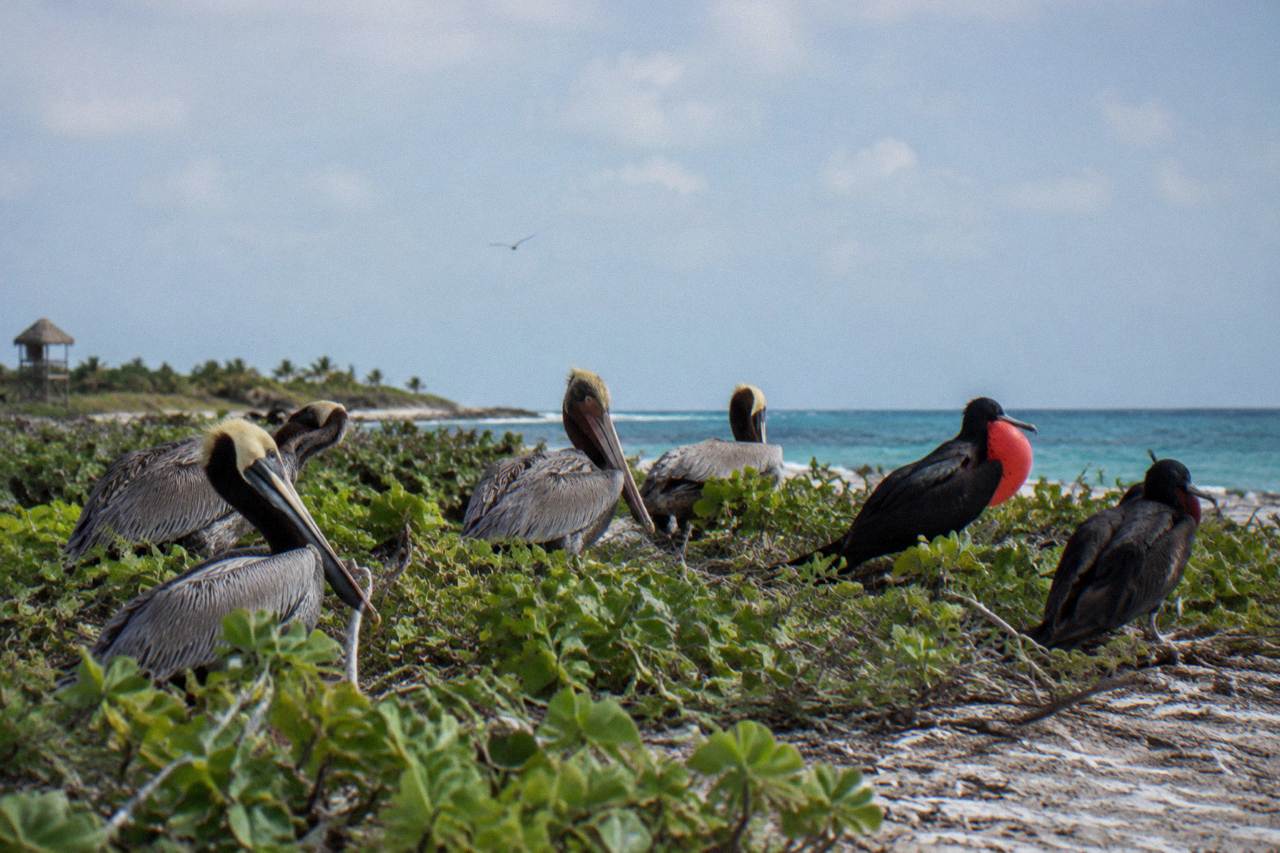
Isla Contoy is one of the few places on the Mexican Caribbean coast where the birds, not the beach, are the reason the island is protected at all. The national park decree of 2 February 1998 created a 5,126 hectare protected area, and the island's beaches carry a separate sanctuary designation for nesting sea turtles. For a birder, the practical headline is the colony list: magnificent frigatebird, brown pelican, double-crested cormorant, brown booby, red-footed booby and royal tern all nest on or around this small island, and the red-footed booby site is described by operator sources as the only nesting colony of the species in Mexico. Since the same sanctuary beaches that draw the birds also shelter nesting sea turtles, our guide to Isla Contoy's sea turtles explains which species nest there and what a day tour might actually show you.
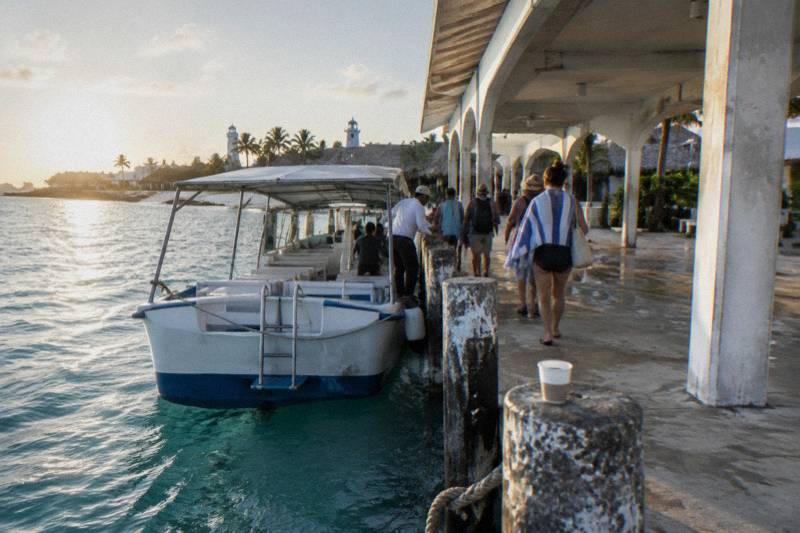
Access is the second headline. There is no public ferry and no independent landing; every visit runs through authorized operators on guided boat days from Puerto Juarez, Punta Sam or Isla Mujeres, about 25 km away. The park counts about 200 visitors a day (the management program counts 202). That cap is the reason the island still looks the way it does, and it is also the reason a birder should think carefully about which boat day to book rather than grabbing the cheapest seat.
This guide covers the birds themselves, the months that matter, the trail and tower rules that shape how you can watch, and how the fourteen listings on this site compare for birding value. The site behind it, Isla Contoy Tours, compares every one of those listings so you can match the day to the birding rather than the other way round. For the park's wider background, see the Isla Contoy national park overview, and for the nesting turtles that share the sanctuary, the wildlife and sea turtles guide.
What Birds Can You See On Isla Contoy?
Isla Contoy holds well over 150 recorded bird species: about 173 cited by park-affiliated operators, 183 on the eBird hotspot list, and about 151 in older Ramsar and CONANP reports. The seabird colonies include magnificent frigatebird, brown pelican, double-crested cormorant, brown booby, red-footed booby and royal tern, and several of these are resident and present all year, which is what makes the island unusual.
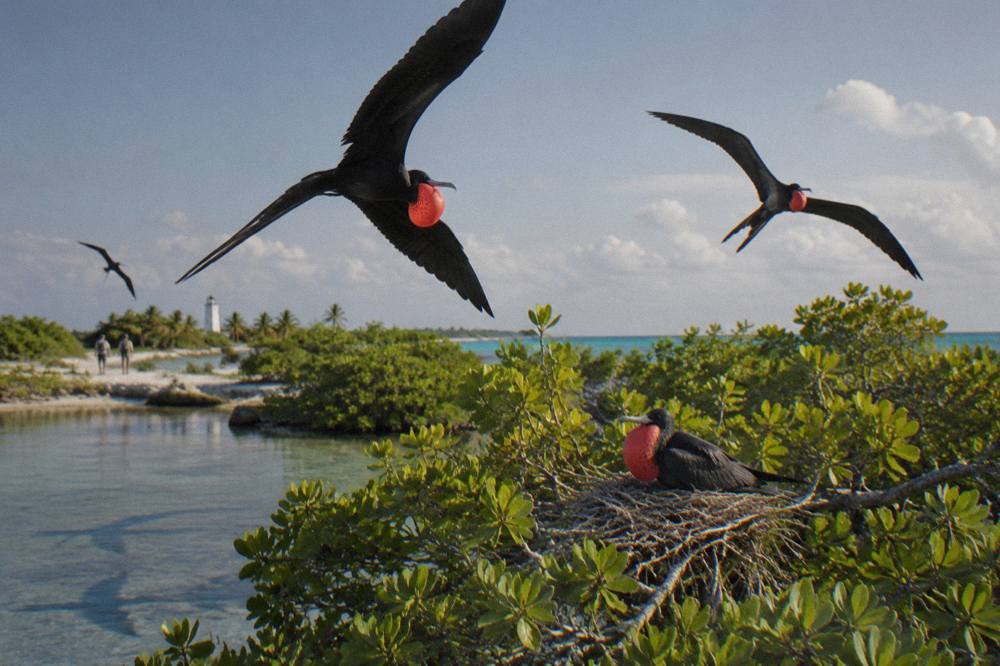
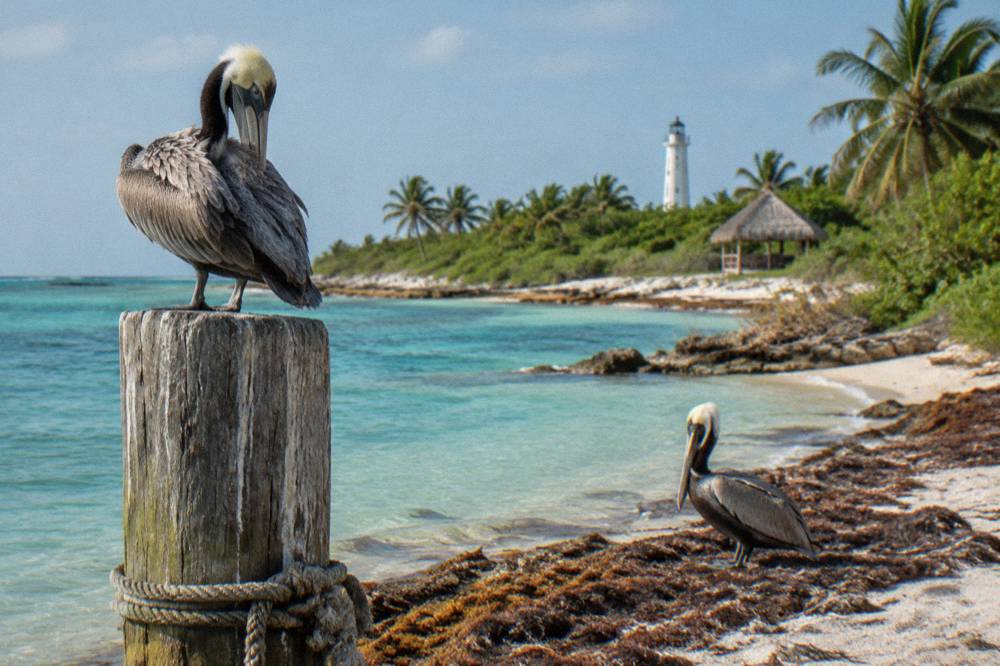
The headline colonies are the draw. The magnificent frigatebird colony is described by park-affiliated operators as one of the largest in the region, with males displaying their red throat pouches during the courtship period. Brown pelicans nest in the mangroves in numbers described in the hundreds. Double-crested cormorants are abundant residents, often seen drying their wings, and both booby species nest on the island. The red-footed booby colony is reported by operator sources as the only nesting colony in Mexico, which is the single most compelling line on the island's bird resume. Royal terns nest in colonies of hundreds. Beyond the seabirds, herons and egrets, terns and a rotating cast of migratory species push the recorded list past 150. You can browse the full hotspot record on the eBird hotspot list for Isla Contoy, which is the closest thing to a live census the island has.
No operator promises a sighting. Weather, season and the birds themselves decide what a given day delivers. What the listings do promise is access to the trails and viewpoints where the colonies are visible, with a certified guide who leads the walk.
| Species | Status on Contoy | Reported activity window |
|---|---|---|
| Magnificent frigatebird | Major resident colony, thousands of individuals | Nesting reported roughly November to April |
| Brown pelican | Resident nesting colony in the mangroves | Peak activity reported December to April |
| Double-crested cormorant | Abundant resident | Present all year |
| Brown booby | Resident nesting colony | Present all year |
| Red-footed booby | Reported as the only nesting colony in Mexico | Peak reported November to March |
| Royal tern | Resident, colonies of hundreds | Nesting reported March to July |
The activity windows in that table come from operator summaries and secondary sources, so treat them as reported patterns rather than guarantees. The resident colonies are the reliable core: pelicans, cormorants, frigatebirds and boobies are described as visible year round when the port is open.
When Is The Best Time Of Year For Birdwatching On Isla Contoy?
November to April is the calm, dry window and it overlaps the reported frigatebird nesting period, so most birders plan around it. The resident colonies are present in every month. CONANP recommends visiting all year except January, when Norte winds make port openings unlikely, and the Port Captaincy, not the operator, makes the final call on departures.
The seasonal logic is straightforward. Dry season runs November to April, with calmer seas and lower humidity, and that is when the crossing is most comfortable and the reported frigatebird courtship peaks. Hurricane season runs 1 June to 30 November per NOAA, and while trips do run through it, wind and swell can cancel departures or cut the snorkel stop. January is the odd month out: the official park guidance singles it out because Norte winds make it unlikely the port opens at all. That matters more here than on most Caribbean islands because there is no fallback ferry; if the port is closed, the day simply does not happen.
For birders weighting their calendar, the strongest reported overlap is November to April: frigatebird nesting, red-footed booby peak reported November to March, pelican activity reported December to April, all inside the dry season and outside the worst of the hurricane season. A climate dataset puts Cancun sea temperatures at about 25 to 29 C across the year, which matters mainly for choosing what to wear on the boat. The fuller seasonal picture, including sargassum and sea state, is in the best time to visit guide.

Because time on the island is capped and the trails are shared, birders who want the quietest walks tend to favor shoulder months inside the dry season rather than the December and March peaks of general tourism. That is a judgment call, not a rule; the park does not publish crowd data by month.
Can You Visit Isla Contoy On A Birding-Only Trip From Cancun Or Isla Mujeres?
No tour sells a birding-only day. Every Isla Contoy trip is a general nature day that includes a guided walk, and the certified guide who leads that walk is the same person pointing out the colonies. Dedicated birdwatching services exist as separate, customized private trips outside this site's lineup of fourteen listings.
Birders sometimes expect a specialist departure with scopes and a species target list, and that product does not exist. What exists is a set of nature days that all include the guided island walk, and they differ in how much time ashore they give you and where they depart from. The Isla Mujeres departures are the shortest path: reported boat time from Isla Mujeres is about 1 to 1.5 hours, and as little as 45 minutes on some routes. Less boat time means a later start and, on some listings, more of your energy left for the trails.
The featured trip for birders on this site is the National Park day run by Isla Fun Tours from the Black Pearl dock on Isla Mujeres or from Cancun, from $136 per person, rated 4.6 from 35 reviews, with a 6 to 7 hour duration that includes a guided eco-tour, a traditional lunch and about 3 hours of island time in the listed itinerary. Because it departs from Isla Mujeres, the ferry leg from Puerto Juarez, reported at 15 to 20 minutes with an adult one-way fare of about MXN 290, is something you arrange yourself. For how that leg works, see the guide to reaching the island.
A different Isla Fun Tours listing, the Untouched Beach Day from $139 per person, rated 4.8 from 22 reviews, covers similar ground from the same dock with snorkel gear and beers listed, and a stated environmental tax and dock use fee of US$10 per person in cash on the day. Same operator, two separate listings, two different fee lines; that distinction is worth checking before you book either.
For birders weighing Cancun versus Isla Mujeres as a base, the trade is simple: Cancun hotels get pickup on ten of the fourteen tours, while the Isla Mujeres departures trade hotel pickup for shorter crossings and smaller listed group maximums (30 travelers on two of the island tours, versus 50, 60 or 160 on the big shared days). The Isla Contoy trip from Isla Mujeres guide works through that choice in detail.
What Are The Rules On The Island's Trails And The Observation Tower?
Movement inside the national park is on marked interpretive trails with a mandatory guide, per CONANP's rules, and the viewpoints and facilities sit along those routes. Sunscreen and blocker are banned outright, smoking is prohibited, you may touch nothing, and a life vest is mandatory for snorkeling, so birding on Contoy means eyes up, hands off, and clothing rather than lotion for sun protection. Since that vest rule applies to the boat stop on the reef, our post on can you snorkel at Isla Contoy explains how the swim works and which tours include gear.
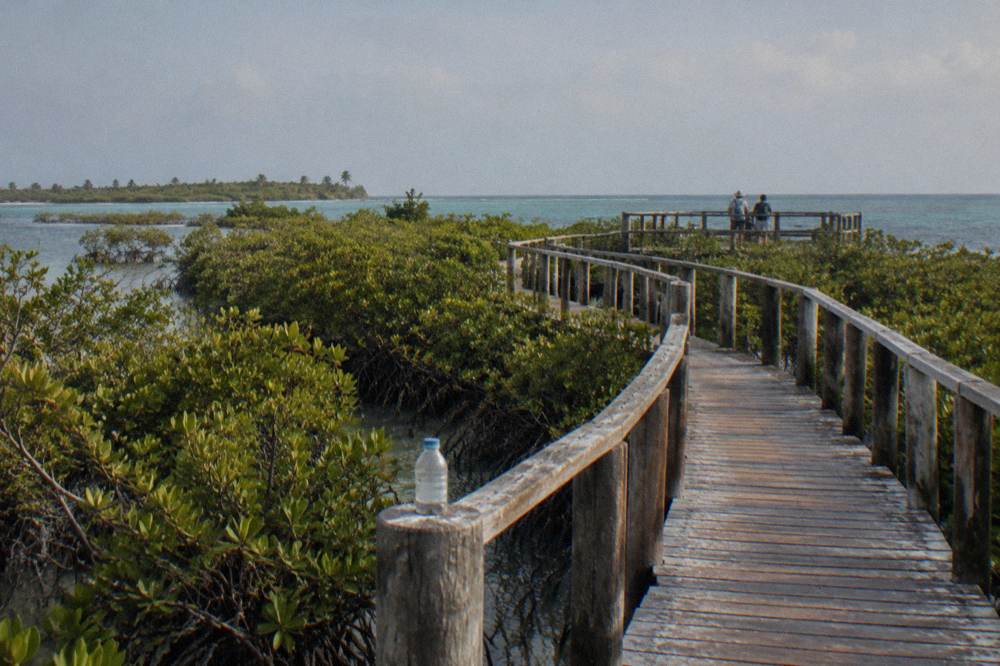
The official rules are published on the CONANP park page, and the full detail sits in the management program for the island's beach sanctuary. The trail rule is the one that shapes a birder's day most: you cannot wander. The walk is a guided circuit through the mangrove and coastal scrub, with miradores along the way, and the visitor facilities include an interpretive center. Operator descriptions of a tower or lighthouse climb vary, so treat the tower as a listing-level detail rather than a promise. Groups on the trails are kept small, with guides certified under the park's arrangements.
The sunscreen rule deserves its own sentence because it surprises people. No sunscreen or blocker is permitted, and the management program adds that you should stop using it 30 minutes before arriving at the protected area. Some listings go further and ban repellent too, while one catamaran listing says only biodegradable sunscreen is allowed and two boat-day listings say even biodegradable harms the reef; the official rule wins, so plan on a rash guard, a hat, shade and nothing applied to skin. Mosquitoes are noted in the vegetated areas in guest reports, which is one more argument for long, light sleeves rather than spray.
Two more rules round out the picture. There is no accommodation on the island and no overnight product of any kind, so the birding day ends when the boat leaves; the Can You Stay Overnight On Isla Contoy? article covers why. And the park's hours are every day 9:00 to 18:00, subject to weather, which sets the outer frame for every itinerary. If your boat day also includes a swim stop, the Isla Mujeres versus Isla Contoy snorkeling comparison lays out how the two reef experiences differ in crowds, rules and price.
Which Boat Days Give Birders The Most Time On The Island?
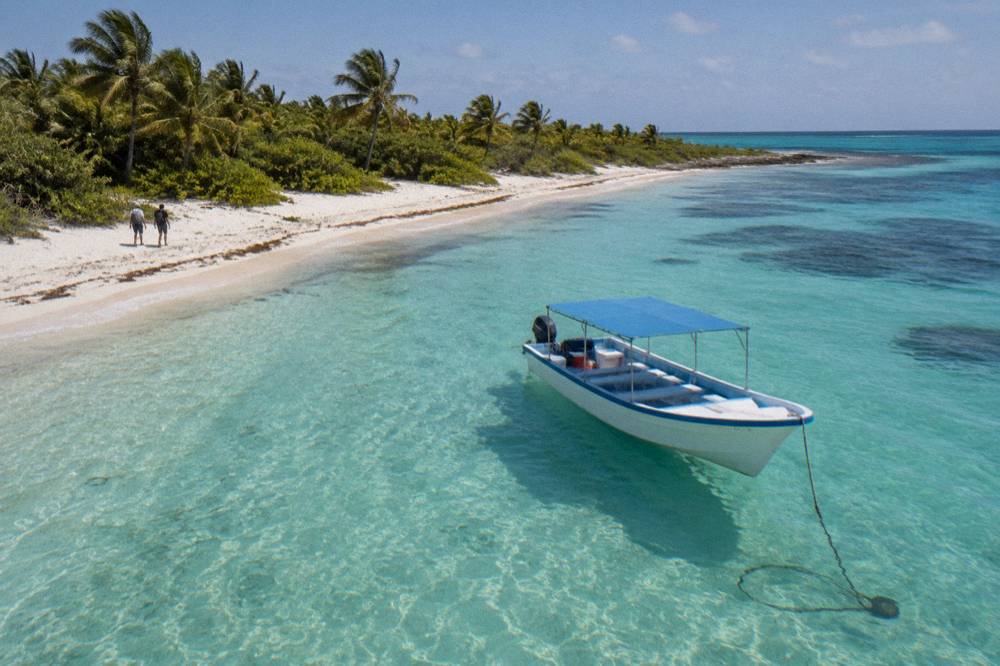
Time ashore varies by listing: 3 hours 5 minutes on the National Park, Optional Snorkel from Isla Mujeres, 4 hours 30 minutes on the sailing catamaran day, and 2.5 hours on the eco adventure. The Cancun catamaran days list 4 hours at Contoy. For a birder, island time is the single most important number on any listing, so read the itinerary line before the price line.
The eco adventure from Contoy Adventures, departing its own marina at Punta Sam next to the Isla Mujeres ferry terminal, lists two and a half hours on Contoy including a tour with a certified guide, plus a 30-minute Ixlache reef snorkel stop and an optional hour at Isla Mujeres. It runs from $140 per person, rated 4.3 from 209 reviews, with hotel pickup from Cancun and Playa del Carmen, breakfast, buffet lunch, sterilized snorkel gear and an open bar all listed. That open bar line is one of only four among these tours.
The catamaran days give the longest listed island stays. The sailing day from Marina Xtabay, from $139 per person, rated 4.3 from 80 reviews, lists 4 hours 30 minutes at Contoy plus a 30-minute stop at El Farito; note it has no hotel pickup, with check-in from 9:30 and departure at 10:00, and the reef tax of US$20 per person is paid at check-in. The two 10-hour catamaran days from Nauticos del Caribe and Open Vacations each list 4 hours on the island with unlimited national open bar after the meal.
| Listing | Operator | From | Rating | Listed time at Contoy | On-site fee line |
|---|---|---|---|---|---|
| National Park, Optional Snorkel | Isla Fun Tours | $136 per person | 4.6 from 35 reviews | 3 hours 5 minutes (visit) | Not stated |
| Eco Adventure, 8 Hours | Contoy Adventures | $140 per person | 4.3 from 209 reviews | 2 hours 30 minutes | All fees and taxes excluded, no amount stated |
| Sailing Catamaran, 7 Hours | Cancun Sailing Catamarans | $139 per person | 4.3 from 80 reviews | 4 hours 30 minutes | US$20 per person at check-in |
| Nauticos Catamaran, 10 Hours | Nauticos del Caribe | $153 per person | 4.0 from 15 reviews | 4 hours | US$20 per person at the marina |
| Open Vacations Catamaran, 10 Hours | Open Vacations | $155 per person | 4.3 from 10 reviews | 4 hours | US$20 per person at the marina |
| Untouched Beach Day | Isla Fun Tours | $139 per person | 4.8 from 22 reviews | 3 hours (park) | US$10 per person in cash |
A caution on fee lines, because birders comparing prices often trip over them. Nine of the fourteen listings state a US$20 per person on-site fee, one states US$10, and four state none at all, which means "not stated", not "included". Separately, two listings (the Bluecaribe beach BBQ day at from $141 per person and the 10-Hour Nature Expedition at from $139 per person) state a further final balance of US$60 per person on top of the booking price. None of these USD lines is the official CONANP park fee, which is MXN 225 per person per day with exemptions for children under 12, seniors, people with disabilities, and discounts for students, teachers, Mexican nationals and foreign residents with valid ID. The fee mechanics are untangled in Is The Isla Contoy Entrance Fee Included In The Tour?
Weather policy matters to birders as much as fee lines, because a windy day trades your trail hours for a longer boat ride. The listings state their own terms: weather cancellations generally mean a different date or a full refund, while a skipped snorkel or a cut Isla Mujeres stop is not refund grounds on the 10-hour catamaran listings. Read the policy block on your chosen listing rather than assuming.
What Should A Birder Bring To Isla Contoy?
Bring binoculars, a hat, a rash guard or long light sleeves, a refillable water bottle and cash for whatever on-site fee your listing states. No sunscreen of any kind is permitted, so clothing and shade do the work repellent and lotion would do elsewhere. Sturdy sandals or light shoes beat bare feet on the trails, and a dry bag protects optics on the speedboat crossings.
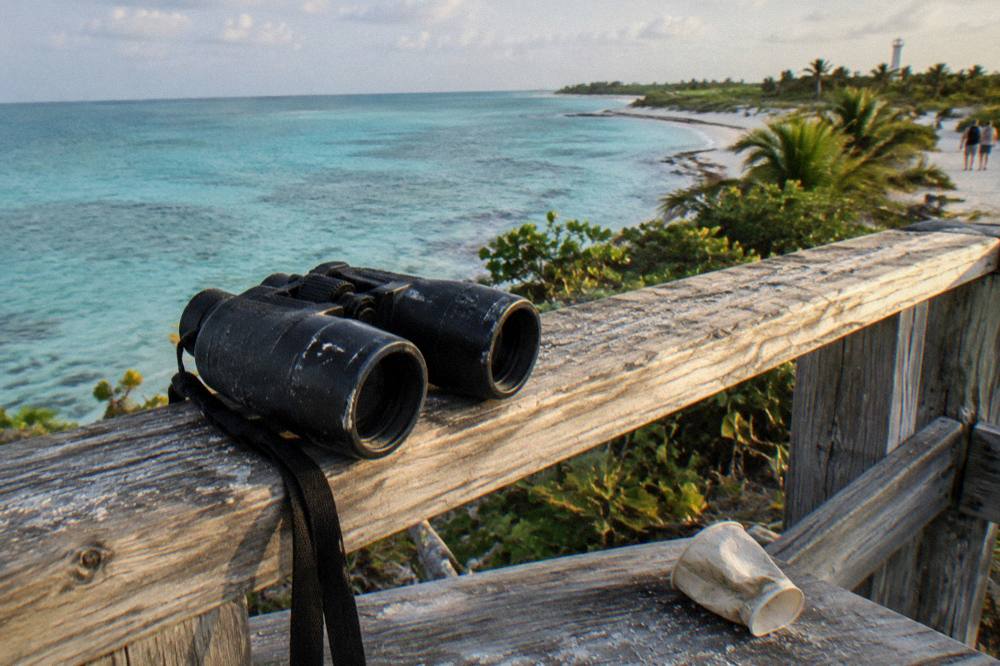
Optics first. The colonies are viewed at range, from the trails, the miradores and the beach, so binoculars earn their space; a scope is a weight decision, since several listings involve boarding small boats where dry storage is limited. A camera with a modest telephoto beats a phone for frigatebird flight shots. Small backpacks that fit on your lap are allowed on the Beach Lunch Day listing, which explicitly bans luggage; other listings stay quiet on bags, so pack as if space is tight.
Clothing second, because the sunscreen ban makes it a real decision. A long-sleeve rash guard, a wide hat and light long trousers handle both sun and the mosquitoes noted in the vegetated areas. Motion-sickness remedies are worth carrying on any of the shared speedboat days; the crossing is open water and the return leg is often the rougher one. The full packing logic, including what the rules mean for repellent, is in the what to bring guide.
| Item | Why it matters on Contoy |
|---|---|
| Binoculars | Colonies are viewed at range from trails and miradores |
| Rash guard and hat | Sunscreen and blocker are banned outright by park rules |
| Long light trousers | Sun cover plus the mosquitoes noted in vegetated areas |
| Cash in USD | Nine listings state a US$20 per person on-site fee, one states US$10 |
| Dry bag | Protects optics on speedboat crossings and reef stops |
| Motion-sickness remedy | The crossing is reported at about 25 km from Puerto Juarez or Punta Sam, per CONANP |
One last planning note for the serious lister. Whale sharks are not part of any tour to Contoy; their season off Isla Mujeres is reported as roughly mid-May to mid-September on separate trips, so do not book a Contoy day expecting one. If the big pelagic draw is part of your trip, plan it as its own day, and see the whale shark season guide for how the calendars compare. Birders staying in Playa del Carmen should also read the Isla Contoy tour from Playa del Carmen guide, since the added transfer shapes how early the birding day starts.
The most-reviewed tour, Ocean Tours Mexico's Snorkel Day, 8 Hours with 829 reviews at 4.8, from $179 per person, is a solid generalist choice with a listed 3-hour Contoy block and hotel pickup from Playa del Carmen, but the bird-specific decision still comes down to island hours per dollar and departure point. Run the picks below against your dates and pick on time ashore.
Common Questions About Birdwatching On Isla Contoy
How Many Bird Species Have Been Recorded On Isla Contoy?
Well over 150: about 173 cited by park-affiliated operators, 183 on the eBird hotspot list, and about 151 in older Ramsar and CONANP reports. The count depends on the source and the year, so treat any single number as one census among several.
Which Seabird Colonies Nest On Isla Contoy?
Magnificent frigatebird, brown pelican, double-crested cormorant, brown booby, red-footed booby and royal tern. Operator sources report the red-footed booby site as the only nesting colony of the species in Mexico. Most of these colonies are resident and present year round, subject to weather and season.
When Is Frigatebird Nesting Season On Isla Contoy?
Reported as roughly November to April, with courtship displays peaking inside that window. This is an operator-reported pattern, not an official schedule, and it overlaps the November to April dry season.
Can You Walk The Isla Contoy Trails Without A Guide?
No. Park rules require movement on marked interpretive trails with a mandatory guide, and visits run only through authorized operators. There is no independent landing and no public ferry to the island.
Are There Birding-Only Tours Of Isla Contoy?
No. All fourteen listings are general nature days that include a guided island walk with a certified guide. Dedicated birdwatching services exist as separate customized private trips outside this lineup.
Can You Wear Sunscreen While Birdwatching On Isla Contoy?
No. CONANP prohibits sunscreen and blocker entirely, and the management program says to stop using it 30 minutes before arrival. Wear a rash guard, a hat and long light clothing instead, and rely on shade along the trails.