Can You Wear Sunscreen On Isla Contoy?
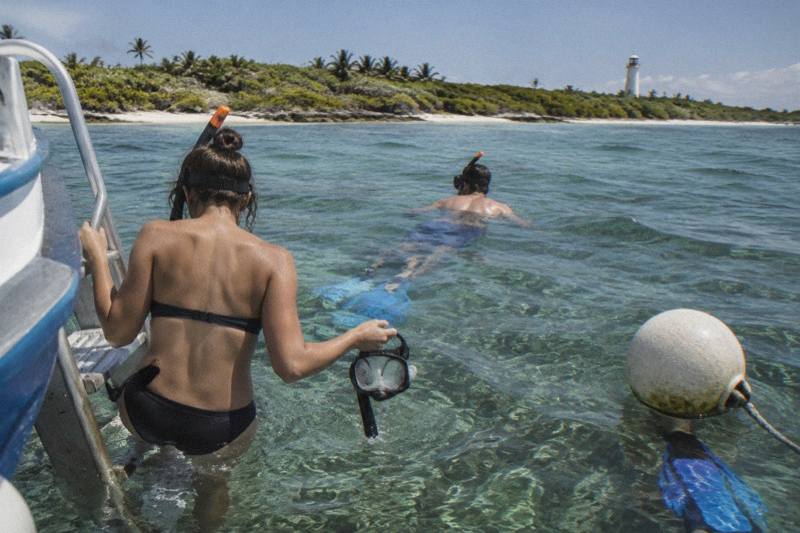
No. Isla Contoy's national park rules ban sunscreen and blocker entirely, and the management program says to stop applying it 30 minutes before arrival. Here is what the official rule says and what to wear instead.
What Do The Official Rules Say About Sunscreen?
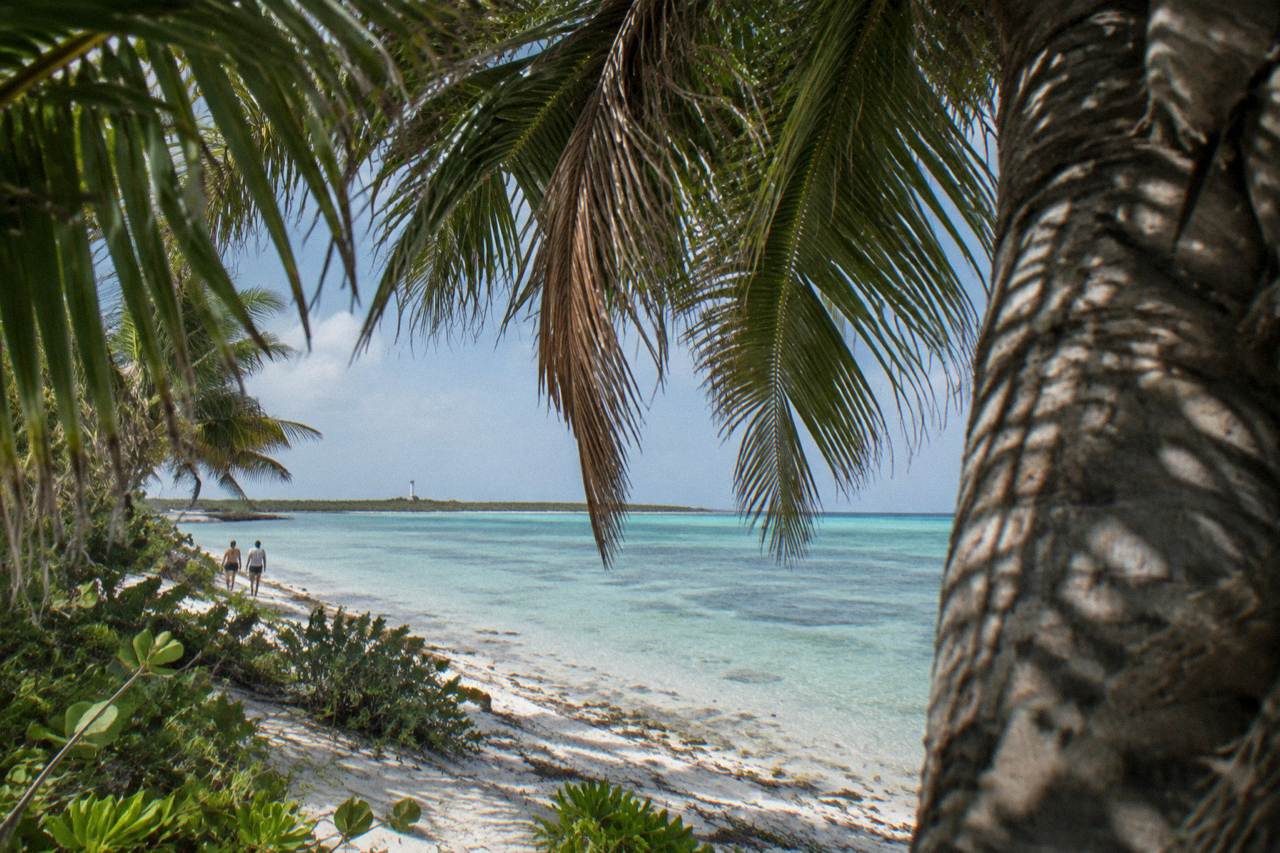
No. The official rules for Parque Nacional Isla Contoy prohibit sunscreen and sun blocker entirely, and the park's management program instructs visitors to stop applying any 30 minutes before arrival at the protected area. Neither reef-safe nor biodegradable products are exempt under the official wording, so the reliable strategy is clothing, shade and a hat, with nothing applied to the skin. Since the park also keeps daily attendance very low, our guide to how many people can visit Isla Contoy each day explains what that limit means for booking a tour and avoiding crowds.
That is the short answer, and it surprises people who have read tour listings describing "biodegradable sunscreen only" policies elsewhere in Cancun and Isla Mujeres. Contoy is stricter than the average Caribbean beach because it is not an average beach. It is a national park and a bird sanctuary with a reef, the Ixlache barrier, lying just south of the island, and the federal environment agency that administers it, CONANP, publishes its visitor rules directly. The official listing states them plainly: no smoking, touch nothing, no sunscreen or blocker, and a mandatory life vest for snorkeling. Those daytime-only rules raise an obvious question about sleeping arrangements, and our guide to staying the night on Isla Contoy explains why hotels and camping are off the table and which nearby towns make the best base.
The management program for the Santuario Playas de Isla Contoy, the turtle nesting sanctuary that overlays the island's beaches, adds the timing detail that trips up most visitors. It says no tanning oils or sunscreens, and that visitors should stop using them 30 minutes before arriving at the protected area. In practice that means if you applied lotion at your hotel in Cancun or on the ferry dock at Punta Sam, you are outside the letter of the rule by the time you land, and crew on the boat days will often say so before anyone steps off. The rule exists largely for the turtles themselves, and which sea turtle species nest on Isla Contoy explains who those protections are for and when nesting actually happens.
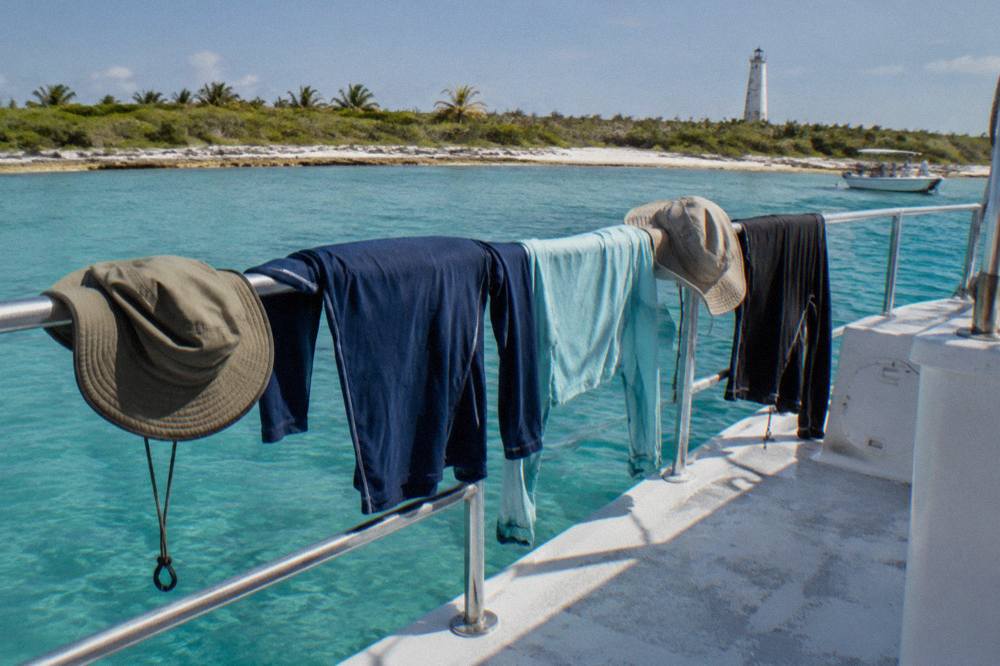
Why such a strict line? Coral reef systems absorb ultraviolet filters, and the chemicals in conventional sunscreens are documented stressors for coral. The reef at Contoy is part of the Mesoamerican system, and the island's whole reason for being protected, its seabird colonies, its turtle nesting beaches, its undeveloped shoreline, depends on the water staying clean. A cap of about 200 visitors a day (the management program counts 202) keeps human pressure low, and the sunscreen ban is the same philosophy applied to what visitors carry on their skin.
The rule also lands in the middle of a decision most readers of this site are already making: which boat day to book. Every trip here, from the catamaran days to the speedboat runs out of Isla Mujeres, has to carry its guests under the same park rules, so the sunscreen question is really a packing question for whichever trip you choose.
What Exactly Do The Official Park Rules Say About Sunscreen?
CONANP's official listing for the national park bans sunscreen and blocker outright, and the sanctuary management program adds two specifics: no tanning oils or sunscreens, and stop using them 30 minutes before arrival. The same rule set bans smoking, touching anything and entering the water to snorkel without a life vest. There is no exemption written into the official text for biodegradable or mineral products.
The primary source is the park's page on the CONANP protected areas portal, which lists visitor regulations including "no sunscreen or blocker" among the core prohibitions. The management program for the beach sanctuary, a 279 page federal document, is the deeper authority. Its public use rules repeat the ban on oils and sunscreens and set the 30 minute cutoff. That cutoff is the detail worth remembering: the rule is not only about what you apply on the island, it covers your skin when you arrive.
The CONANP listing for the park is where these regulations are published, and the management program document carries the sanctuary's full public use rules. Both are official, and both are the reason this article can give a firm no where a general travel article would hedge.
The official rules do not itemize penalties, and they do not spell out how the rule is checked at the dock. What they do state, clearly, is the prohibition itself. Everything beyond that, from crew confiscating bottles to checks at check in, comes from operator practice and visitor reports, not from the federal text.
| Source | What it says about sunscreen | Where it applies |
|---|---|---|
| CONANP park listing (official) | No sunscreen or blocker, listed among visitor rules | Island and park waters |
| Sanctuary management program (official) | No tanning oils or sunscreens; stop using them 30 minutes before arrival | The protected area's beaches |
| Reef-safe / biodegradable products | Not exempted anywhere in the official wording | Same |
| Tour listings (various) | Wording varies by operator, from "no sunblock or repellent at all" to "biodegradable only" | Each operator's own trip |
Why Do Tour Listings Say Different Things About Sunscreen?
Listing wording genuinely conflicts. One catamaran listing says biodegradable sunscreen is the only kind allowed, while several boat day listings say no sunblock or repellent at all, and one operator's help pages state that even biodegradable products harm the reef. The official CONANP rule wins over every listing: apply nothing. Operators write their own blurbs, but none of them can override the park.
This is worth spelling out because travelers compare listings and reasonably conclude that if one operator allows biodegradable lotion, it must be fine. It is not what the federal rule says. The operator who permits biodegradable sunscreen is describing house policy for the boat ride and the mainland marina. Once that catamaran ties up at Contoy's dock, the park's own rules govern, and the park's rule names no exceptions.
The stricter operator wording is closer to the official position. Some listings tell guests flat out that no sunblock or repellent may be used, full stop. Others stay silent on the subject and let the crew brief passengers on board. Silence in a listing is not permission; it just means the packing guidance lives in the confirmation email or the morning briefing rather than the booking page.
For a reader with a trip already booked, the practical takeaway is simple: treat the strictest version as the real one. If your listing says biodegradable is fine, you can still use it on the ferry ride over, but plan for the island itself on the assumption that nothing on your skin is in compliance. A rash guard makes the whole question disappear, which is why crew members on these trips wear them.
It is also a good example of how the rules and the day fit together: the itinerary includes three hours at the national park with a certified bilingual guide, and the US$20 per person government fee listed on that page is paid on site, cash questions and sunscreen questions both answered at the dock. If the packing list is settled and you are comparing days, the snorkel day from Playa del Carmen and the Isla Mujeres boat days cover the same park under the same rules.
Planning the practical side of a Contoy day goes beyond the bottle in your bag. Our guide to what to bring to Isla Contoy covers the full packing list, and the deeper background on the park itself is in the Isla Contoy national park guide.
What Should You Wear Instead Of Sunscreen On Isla Contoy?
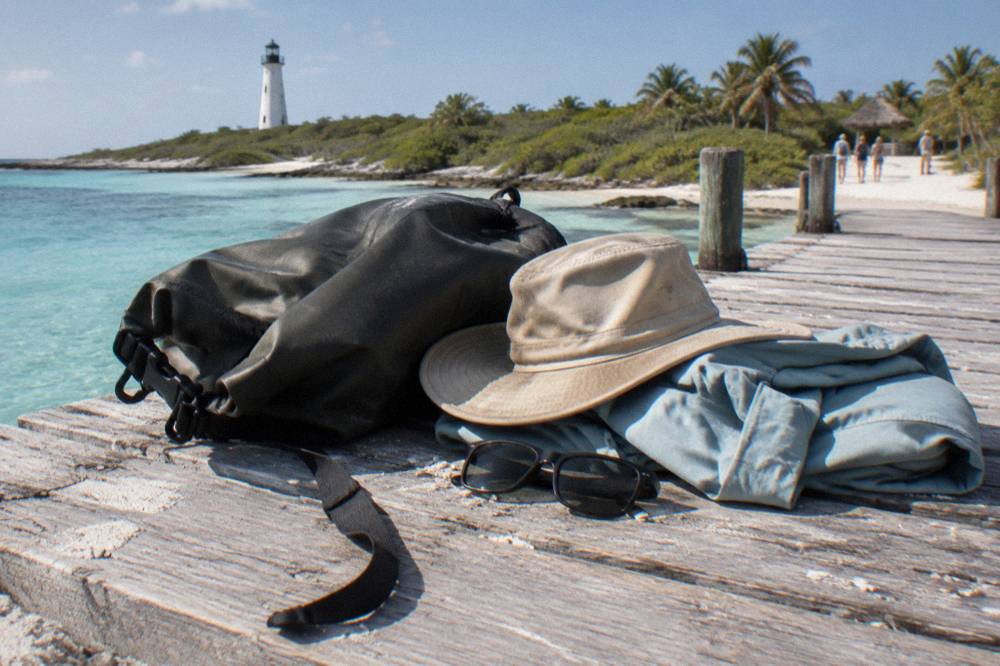
Cover up rather than cream up: a long sleeve rash guard or swim shirt, a wide brim hat, sunglasses, and light clothing that shades shoulders and arms. The park's own recommendation is beachwear that covers you from the sun, and shade, whether the boat's canopy or the island's limited shelter, does the rest. Nothing needs to touch your skin to work.
The official listing itself points this direction. Among its recommendations for visitors is clothing that protects from the sun, and the prohibition on lotions makes that recommendation close to mandatory in practice. A dry fit long sleeve shirt blocks ultraviolet light mechanically, does not wash off in the water, and is what the guides and boat crew on these trips generally wear themselves.
The beach hours are where planning matters most. Itineraries give real time ashore: the catamaran listings schedule four and a half hours at Contoy, the eco adventure lists two and a half hours on the island, and several boat days include a beach stop within a three hour island block. That is a long stretch of tropical sun between roughly 9:00 and 18:00, the park's stated daily hours, with the midday peak in the middle of most trips.
A workable kit looks like this:
- A long sleeve swim shirt or rash guard, the single most useful item, worn in and out of the water.
- A wide brim hat that survives wind, since the crossing can be breezy.
- Sunglasses with a strap.
- Board shorts or longer swim bottoms rather than brief swimwear.
- A light layer for the boat legs, when reflected sun off the water hits from below as well as above.
Reef-safe marketing deserves one direct sentence here: this site does not recommend any lotion for Contoy, mineral included, because the official rule names no exception and one operator's own guidance says even biodegradable products damage coral. If a product has to be applied for medical reasons, that is a conversation with the operator before the trip and with park staff on the day, not a loophole to assume.
Does The Sunscreen Rule Apply On The Boat And At The Snorkel Stop?
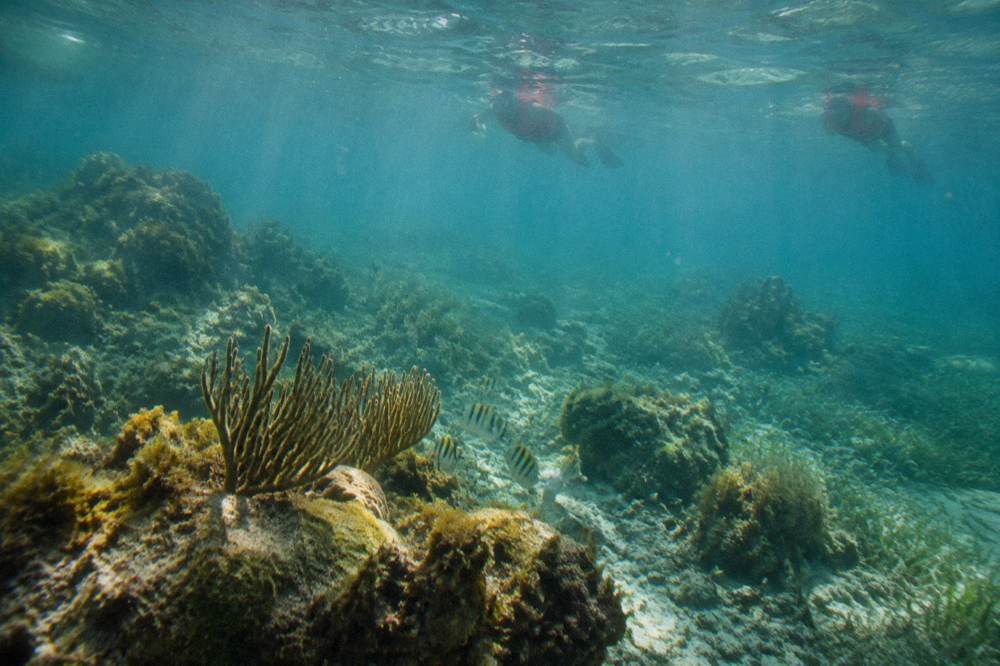
The park's own text governs the protected area, so the hard line starts at arrival, and the management program's 30 minute cutoff effectively pulls it back to the approach. The snorkel stop at Ixlache reef sits inside park waters where the life vest rule applies, and the reef is the ecosystem the sunscreen ban exists to protect, so the safe assumption is covered skin and nothing applied from the moment the boat leaves the marina.
The reef matters here. Ixlache is the barrier reef lying south of the island, part of the Mesoamerican system, and it is where the listings that name a reef schedule their snorkel stop, weather permitting, typically from 30 to 40 minutes in the water with a mandatory life vest. Chemical ultraviolet filters wash off swimmers directly onto coral. That is the mechanism behind the ban, and it is why the rule is not just about littering a beach with bottles. The wider set of guides lives on Isla Contoy Tours.
On the boat legs the operator's policy governs, which is where the listing differences from earlier come back into play. But building your morning around the strictest reading costs nothing and avoids a strip down at the dock. Apply nothing after breakfast, wear the swim shirt from the start, and the question of jurisdiction never arises.
The crossings make clothing sensible for another reason: they are open water runs, with the island about 25 km from Puerto Juarez or Punta Sam per CONANP and a reported 1 to 1.5 hours by boat from Isla Mujeres, as little as 45 minutes on some routes. Sun exposure on a moving boat with no shade aft is significant even before the island. Guests on the catamaran days get canopy space; guests on speedboats get spray and sun, and dress accordingly.
How Do The Different Contoy Trips Handle The Sunscreen Briefing?
Every trip lands at the same dock under the same park rules, but the briefing happens differently: hotel pickup days brief on the van or at the marina, catamaran days brief at check in, and the Isla Mujeres departures brief at a walk up meeting point. What varies is when you hear the rules, not what the rules are.
On the hotel pickup boat days, the briefing starts early. The Snorkel Day, 8 Hours from Ocean Tours Mexico, the most reviewed trip with 829 reviews and a 4.8 rating, picks up from Playa del Carmen hotels and runs 8 hours with a maximum of 50 travelers, and its itinerary books three hours at the national park. The eco adventure run by Contoy Adventures out of Punta Sam includes sterilized snorkel gear, an open bar and two and a half hours ashore, with pickup from most Cancun and Playa del Carmen hotels when the right option is chosen.
The catamaran days read a little differently. The sailing experience from Marina Xtabay has check in from 9:30 for a 10:00 departure, no hotel pickup, and schedules four and a half hours at Contoy with lunch and snorkel gear listed; its reef tax of US$20 per person is paid at check in on the day. The two ten hour catamaran listings, Nauticos del Caribe and Open Vacations, both include an open national bar after the meal and dock taxes of US$20 per person at the marina.
The Isla Mujeres departures are the most self directed. The Contoy Adventours snorkel trip meets at an office on Av Juarez at 8:30, and the two Isla Fun Tours listings meet at the Black Pearl dock downtown. These are the trips where a first time visitor is most likely to arrive unbriefed, which is exactly why knowing the sunscreen rule before you book matters more here than anywhere.
A different format again is the ten hour nature expedition from Pescado Adventures, from $139 per person with van transport from four pickup zones, buffet lunch and a weather-dependent snorkel activity listed, and a second final payment of US$60 per person stated on the listing. Longer days in the open mean the clothing strategy earns its keep. For a side by side of the boat formats, see catamaran or speedboat to Isla Contoy, and the broader field is in the best Isla Contoy day trips guide.
Is Isla Contoy The Only Place Around Cancun With This Rule?
No, but it is the strictest and the best documented. Other protected marine areas in the region restrict chemical sunscreens, and some Isla Mujeres and mainland beach operators promote biodegradable only policies, yet Contoy is the one with a published federal rule that names sunscreen and blocker without exception. Where a day combines both islands, the Contoy standard should govern the whole day.
Most Contoy trips call at Isla Mujeres on the return, usually about an hour of free time, and many visitors spend that hour on Playa Norte, the public beach at the north end. Isla Mujeres has no island wide sunscreen ban of its own that our verified sources document. Practically, though, a swim shirt you have worn all day is still on you, and reapplying lotion for one hour of a twelve hour outing is more trouble than it is worth.
Sunscreen rules at Mexican parks have tightened over the past several years across the Riviera Maya, and operator wording has not kept pace everywhere, which is why the listing conflicts earlier in this article exist at all. The reliable hierarchy is: federal park rules first, sanctuary management program second, operator policy third. On Contoy the first two layers agree.
Is Any Sun Protection Allowed On The Island?
No, and the ban reaches further than the beach itself: the management program's 30 minute cutoff means the last lawful application happens before you approach the protected area, and the reef snorkel stop inside park waters is covered too. Rash guard, hat, sunglasses and shade replace the bottle entirely, and they work better on a long day of boat sun anyway.
That is the whole rule, but readers booking a trip usually have follow up questions, and they are good ones. Several operators also ban insect repellent, the January Norte winds matter more to your plans than any lotion ever will, and the question of what a tour includes versus what it charges on site, like the US$20 per person fee lines on several listings, deserves its own answer. The questions below cover the ones that come up most.
Common Questions About Sunscreen On Isla Contoy
Is Biodegradable Sunscreen Allowed If The Listing Says So?
One catamaran listing states biodegradable sunscreen is the only kind allowed on its trip, but that is operator policy for the boat, not the park's rule. The official ban names no exception, and another operator's guidance says even biodegradable products harm coral. Treat the official rule as the one that governs on the island.
What About Insect Repellent?
Several listings tell guests not to use repellent at all, mirroring the sunscreen line. The official park listing does not itemize repellent separately in the rules we verified, so the safe course is the same as for sunscreen: apply nothing before landing, and cover up with clothing instead.
When Exactly Do I Have To Stop Applying Sunscreen?
The sanctuary management program says to stop using tanning oils and sunscreens 30 minutes before arriving at the protected area. In practice, on a two hour crossing from a Cancun area marina, that means applying nothing after hotel pickup at the latest, and simply starting the day in a swim shirt.
Do The Rules Differ Between The Boat, The Reef And The Island?
The park's rules govern the protected area, including the reef snorkel stop, and the management program's cutoff pulls the line back to the approach. The boat itself falls under operator policy, which is why listings differ. Dressing for the strictest version from the start makes the distinction irrelevant.
Where Can I Read The Official Rule Myself?
The regulations are published on the CONANP protected areas portal page for the park, and the sanctuary management program carries the full public use rules, including the 30 minute cutoff. Both are federal documents, and both outrank any tour listing's wording.