Is Isla Contoy Closed In January?
Isla Contoy is not officially closed in January, but CONANP recommends against visiting that month because Norte winds often keep the port shut. Here is what that means for your trip.
The short version confuses people because it splits into two answers that sound contradictory. No decree, no seasonal closure and no January rule shuts Isla Contoy. The official CONANP page for the park lists opening hours of every day, 9:00 to 18:00, subject to weather. But that same official page carries a recommendation to visit all year except January, because Norte winds make it unlikely the port will open. So the island is technically open and practically unreliable that month, and the difference between those two facts decides whether your January plan works.
What Do The Official Rules Say About January?
No, Isla Contoy is not closed in January by any official rule, and the park's stated hours are every day, 9:00 to 18:00, subject to weather. However, CONANP, the national park authority, explicitly recommends visiting all year except January, because strong Norte winds in that month often make it unlikely that the port will open for tour boats at all.
That single sentence carries most of what a January traveler needs, but the mechanics behind it matter. The park has no calendar closure, no annual maintenance period, no nesting-season shutdown that applies to visitors. What closes the island in practice is the port, not the park. Departures to Contoy depend on the Port Captaincy, the harbormaster authority, opening the port to vessels on any given morning, and the management program for the sanctuary confirms that sailing depends on that decision. When the Port Captaincy keeps the port shut, no authorized operator can legally take a boat out, and every Contoy departure from Cancun, Punta Sam and Isla Mujeres is affected at once. Even on mornings when the port does open, you still have to deal with the island's strict daily visitor cap on Isla Contoy, which explains why some tours fill up faster than others.
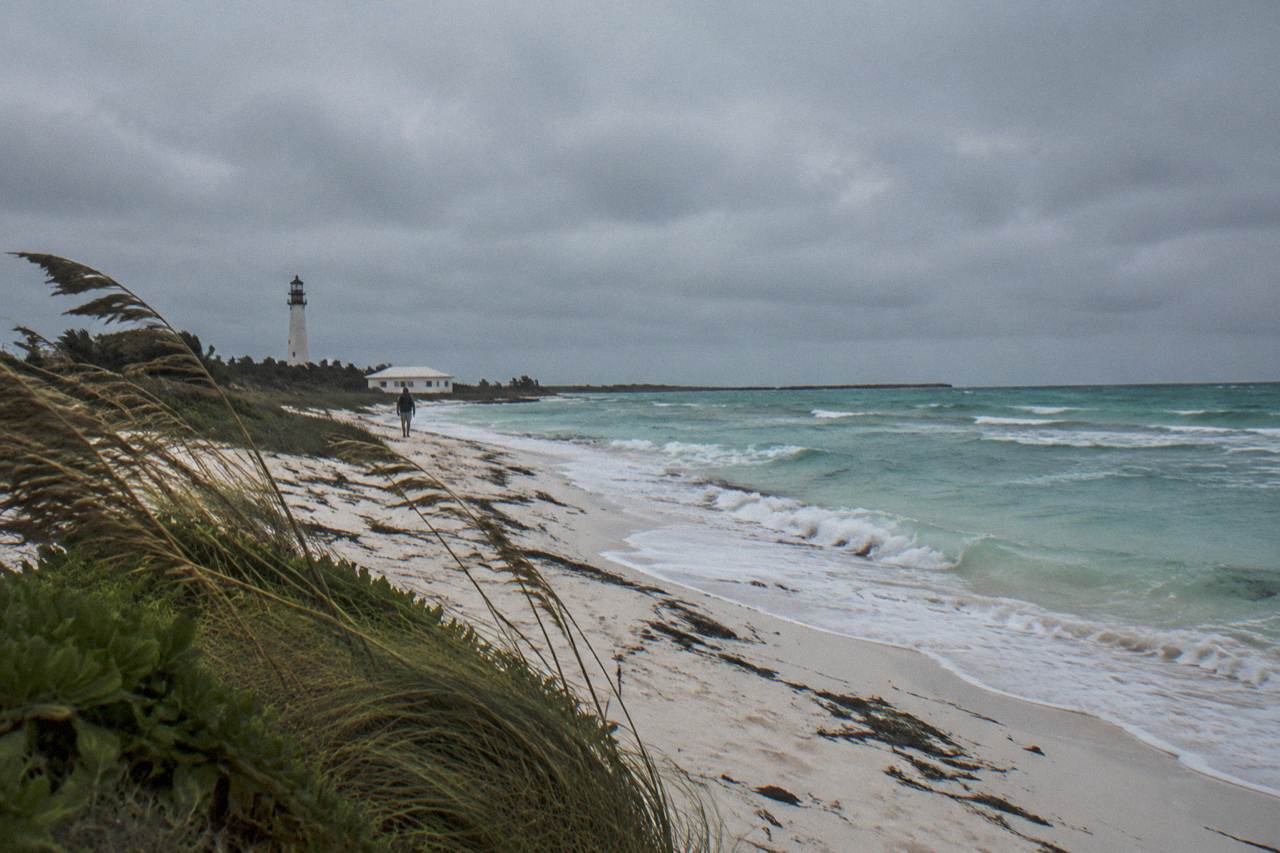
Norte events are not subtle. These cold-air surges push strong northerly winds across the Gulf and the Yucatan Channel, and they are common enough in winter that the park authority named January specifically in its own guidance rather than treating it as a marginal footnote. A Norte can blow for a day or several days. It can also miss a week entirely, which is why the word used is "unlikely" rather than "never": some January days do open, boats do run, and visitors do land. Planning a January trip is therefore a probability question, not a rule question.
There is also a timing asymmetry worth understanding before you commit. Park hours run 9:00 to 18:00, but tours leave marinas in the morning, often with hotel pickups starting around 6:00 from Playa del Carmen and later from the Cancun Hotel Zone, per the fresh logistics reporting. The go or no-go decision is made on the morning's conditions, sometimes with the boat already boarding. A Norte that arrives overnight can cancel a trip that was confirmed the day before.
If you are locked into January travel, the rest of this article explains how the closures work, what a cancellation does to your booking, and how to stack the odds. If your dates are flexible, the quick summary is that every other month is on the table and the dry season from November to April, minus the Norte risk window, is when conditions are most often favorable. The Isla Contoy Tours on this site run shared boat days, catamarans and Isla Mujeres departures all year, and the choice between them matters more in winter than in summer.
Here are the winter-friendly listings this site compares most often for people weighting schedule risk:
What Are Norte Winds And Why Do They Close The Port?
Norte winds are strong cold-air outbursts from the north that sweep the Yucatan Channel in winter, and they close Contoy departures because rough seas make the crossing unsafe. The Port Captaincy decides each morning whether the port opens, and when it stays shut, every authorized tour boat stays ashore regardless of what your booking confirmation says.
The word "Norte", sometimes written "nortes" in the plural, refers to the pattern rather than a single storm. A cold front crosses the Gulf of Mexico, high pressure builds behind it, and air rushes south across relatively warm water. The result on the sea between Cancun, Isla Mujeres and Contoy is sustained northerly wind and steep chop in open water. The crossing to Contoy from Cancun-area marinas is about 25 km of open water per CONANP, so a Norte that would barely register on a sheltered bay becomes a genuine safety question on this route. From Isla Mujeres the run is shorter, reported at about one to 1.5 hours, and as little as 45 minutes on some routes, but the exposed stretches are the same water.
Why a park recommendation and not a closure? Because the park authority does not control the sea. Its jurisdiction covers the island's rules, its fees, its trails and its visitor cap. The port is controlled by the Capitania de Puerto, the harbor authority, and its openings and closures apply to all vessel traffic, fishing boats included. Press reporting from Isla Mujeres has described ports closing to smaller vessels during strong wind events even outside winter, including during hurricane-season storm passages, and reopening quickly once a system moves on. The practical takeaway: a closure is usually a matter of days, not weeks, which is why rescheduling rather than abandoning the idea is the standard response.
There is a second-order effect worth knowing. Even on a morning when the port opens after a Norte, conditions can remain marginal, and the crossing is often described as bumpy. Travelers prone to motion sickness should plan medication in advance regardless of season, and reviews of these trips frequently mention the ride being rougher on the return leg. None of this is a reason to skip Contoy; it is a reason to weight winter bookings toward operators with clean reschedule terms.
For a concrete winter pick, the Isla Contoy Eco Adventure from Cancun's Punta Sam marina is a useful anchor: from $140 per person for an 8-hour day, with hotel pickup from Cancun and Playa del Carmen-area hotels, breakfast, sterilized snorkel gear, buffet lunch and an open bar all listed in the inclusions. You can compare it against the Playa del Carmen pickup days if your base is farther south, since van time to the marina adds another moving part on a windy morning.
Which Months Have The Best Sailing Weather For A Contoy Trip?
The dry season, November to April, is when conditions are most often favorable, and CONANP's own guidance points to every month except January. Hurricane season runs 1 June to 30 November, with the busiest stretch August to October, so the sweet spot for calm crossings is roughly February to April and November, with January the single month the park authority flags as unreliable.
Breaking the year into planning windows makes the tradeoffs clearer. Each window below combines the park authority's guidance with the seasonal patterns reported across the fresh research files, and none of it is a promise: weather decides day by day.
| Period | Wind and sea pattern | What it means for your booking |
|---|---|---|
| November to December | Dry season starts, Norte risk rises late in the window | Good odds, keep one buffer day |
| January | Norte winds frequent, port openings unlikely per CONANP | Highest cancellation risk of the year |
| February to April | Dry season, calmer patterns, frigatebird nesting reported Nov to Apr | The most reliable window overall |
| May to July | Rainy season begins, hurricane season from 1 June | Warm and usually workable, watch forecasts |
| August to October | Peak hurricane activity, sargassum season tails off late | Book with flexibility, expect possible changes |
A note on the numbers people ask for: water temperatures and visibility figures circulate widely, but this site treats them as secondary and never promises conditions. What can be said plainly is that dry-season months, February through April especially, are the ones most consistently described as calm, and that the park's January caveat is the only month-specific warning any official source gives for this island.
Sargassum follows a different calendar from wind. The seaweed season runs about May to October in the general Caribbean pattern, and monitoring in 2026 has repeatedly shown the northern islands, Contoy among them, in better shape than exposed mainland beaches to the south. So a spring trip is not fighting two problems at once: February to April sits outside both the sargassum window and the worst of the Norte season, which is why it earns its reputation as the prime window.
If you want the full seasonal picture beyond wind, the site's best time to visit guide breaks down crowds, wildlife and water conditions month by month, and the wildlife and sea turtle guide covers what nests when.
What Happens If Weather Cancels Your Trip?
When the Port Captaincy closes the port, the standard operator response is a different date or a full refund, and most listings carry weather-language to that effect. The important exception: a partial change, such as skipping the snorkel stop or cutting the Isla Mujeres visit because conditions deteriorate mid-day, is generally not grounds for a refund, and the catamaran listings say so explicitly.
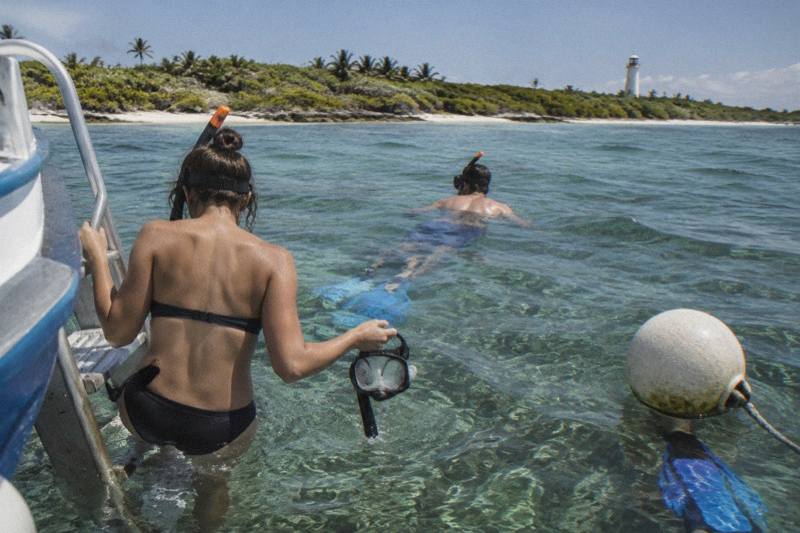
That distinction, full cancellation versus altered itinerary, is where most disappointed reviews come from, so it deserves a careful read before you book any winter date. The logic is defensible from the operator's side: the expensive and risky part of the day is the open-water crossing, and if that runs, the tour happened. The snorkel stop at Ixlache reef sits in exposed water and is weather-dependent on nearly every listing; the reef lies south of the island, part of the Mesoamerican system, and tours stop there from the boat when conditions allow. The Isla Mujeres stop, typically about an hour of free time on the way back, is likewise conditional on the sea state.
Reading the fee and weather lines before booking saves arguments later. Here is how the on-site fee lines are stated across the listings this site carries, quoted as each listing states it:
| Listing | On-site fee stated in the listing |
|---|---|
| Snorkel Day, 8 Hours (Ocean Tours Mexico) | US$20 per person, not in the booking price |
| Eco Adventure, 8 Hours (Contoy Adventures) | All fees and taxes excluded, no amount stated |
| Private 8-Hour Snorkel Day (Ocean Tours Mexico) | US$20 per person, not in the booking price |
| Beach Lunch Day, 9 Hours (Exciting Travel Holidays) | US$20 per person for marina and national park fees, paid on spot |
| Combo Day, Snorkeling (Cancun Vacation Experts) | US$20 per person dock and park fee |
| Sailing Catamaran, 7 Hours (Cancun Sailing Catamarans) | US$20 per person reef tax, paid at check-in |
| Untouched Beach Day (Isla Fun Tours) | US$10 per person in cash, payable the day of the tour |
Two cautions go with that table. First, these US$ fee lines are the operators' own charges as written; they are not the same thing as the official CONANP entry fee, which is MXN 225 per person per day and is published only in pesos. Never let anyone tell you the US$20 "is" the park fee. Second, weather language lives on each operator's live listing, and it changes; read the terms on the listing you actually book rather than relying on a summary, including this one.
Practical winter booking habits that hold up well: keep one flexible day late in your stay so a reschedule can land somewhere; carry cash for the fee line; and screenshot the cancellation terms at booking time. If a storm system or a multi-day Norte shuts the port, your first move is a reschedule request, and the second is the refund path the listing describes. The detailed cost breakdown, including how these fee lines stack against the ticket price, is in the site's guide to what an Isla Contoy trip costs.
The most-reviewed listing, with 829 reviews and a 4.8 rating, is the Snorkel Day, 8 Hours by Ocean Tours Mexico: from $179 per person for an 8-hour day, lunch and drinks listed, the US$20 fee line on top. A large review pool is genuinely useful in January planning, because you can see how the operator handled past weather cancellations in guests' own words.
Do Tour Boats Actually Run From Cancun In January?
Yes, some do: these tours keep their calendars open in January and boats depart whenever the Port Captaincy opens the port. What changes in January is not availability but completion rate, and the operators themselves, from Punta Sam marina runs to the catamaran days, all frame their winter schedules as weather-permitting rather than guaranteed.
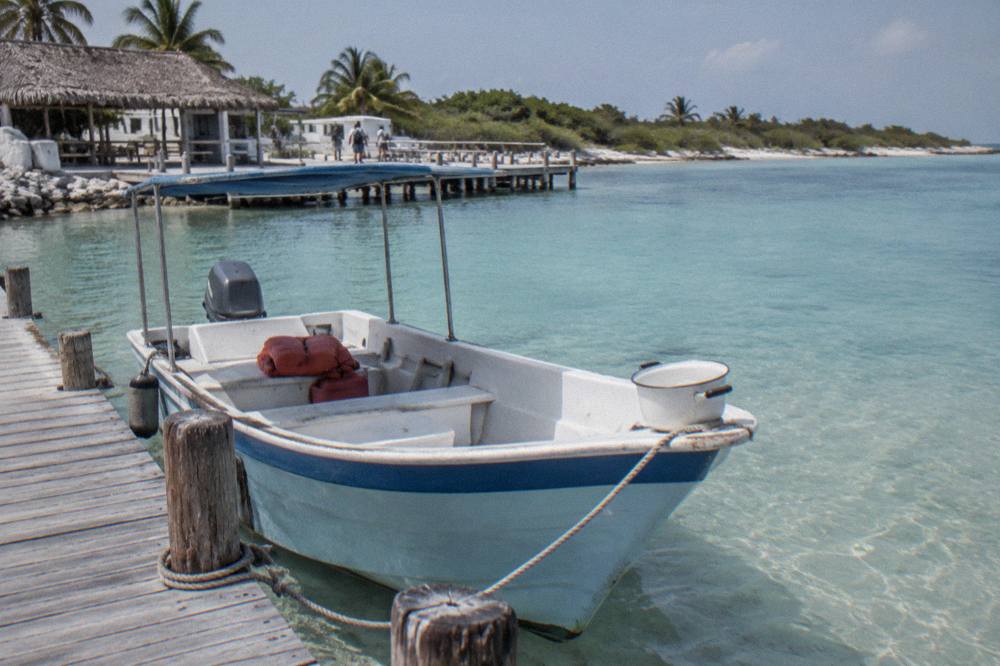
It helps to look at which departure formats exist, because they carry different levels of exposure to a rough morning. Speedboat-style shared days from Cancun and Punta Sam marinas, the format used by the eco adventure and the Snorkel Day, 8 Hours, cross fast but feel the sea directly. Catamarans, like the sailing nature experience from Marina Xtabay, are bigger platforms but still need the port open and the reef stop to be workable. Isla Mujeres departures, such as the Contoy Adventours snorkel trip meeting at an office on Av Juarez at 8:30, start from the closest landfall and run the shortest reported crossing to the island, which can matter on a marginal day, though the same Port Captaincy decision governs them all.
| Listing | Departure point | Duration | From (per person) |
|---|---|---|---|
| Eco Adventure, 8 Hours | Cancun, Punta Sam marina | 8 hours | $140 |
| Snorkel Day, 8 Hours | Playa del Carmen, Flamingos pier | 8 hours | $179 |
| Sailing Catamaran, 7 Hours | Cancun, Marina Xtabay | 7 hours | $139 |
| Nauticos Catamaran, 10 Hours | Cancun / Riviera Maya | 10 hours | $153 |
| Snorkel Trip, 6 Hours | Isla Mujeres, Av Juarez office | 6 hours | $166 |
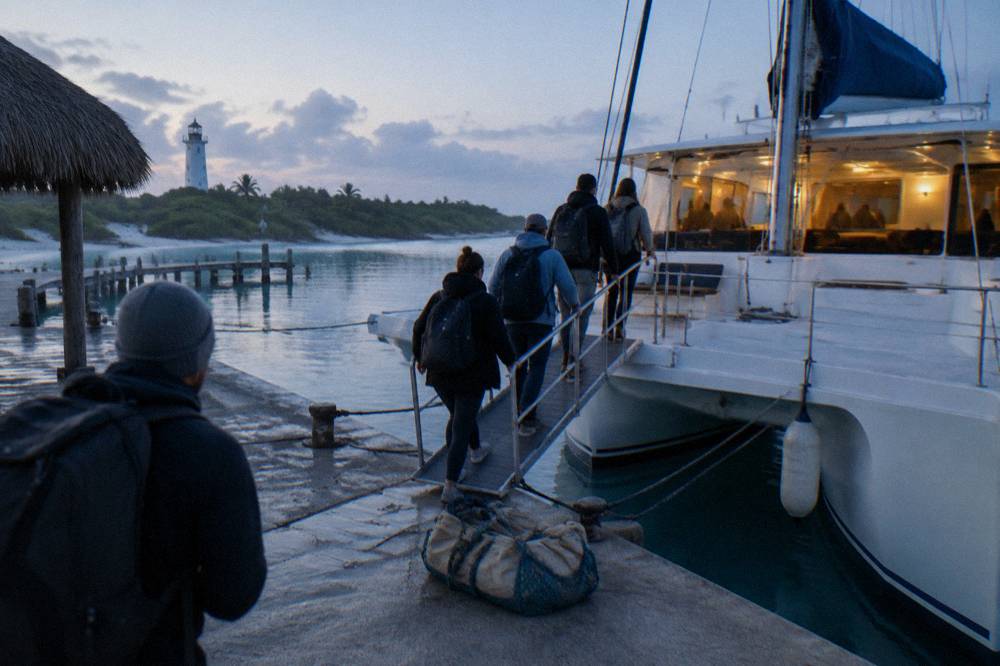
The sailing day from Marina Xtabay deserves a note for January planners: check-in is from 9:30 with a 10:00 departure, transport is not included, and the listing states a US$20 per person reef tax paid at check-in. The listing also states its own policy that a skipped snorkel or a missed Isla Mujeres stop is not a refund trigger, only a full cancellation is. That kind of explicit language is exactly what you want to find on any listing you book for a winter date, because it tells you where the line sits before you have a problem.
For travelers based in Playa del Carmen, the calculus adds drive time: the run from Playa del Carmen to Punta Sam is a reported 80 km, about 1 hour 15 minutes by car, so a marginal-weather morning starts very early and ends in a long ride home if the port stays shut. The site's dedicated guide to the Playa del Carmen departures and the catamaran versus speedboat comparison walk through that trade in detail. January is the month when being 80 km from the marina costs you the most sleep for the least certainty.
The catamaran option from Cancun and Playa del Carmen, a 10-hour day from $153 per person with an open bar listed after the meal, is a good illustration of how a longer day can still be the safer-feeling one: bigger platform, more onboard comfort, and the same reschedule logic if the port closes.
How Should You Plan A January Or Early-Winter Trip?
Plan around probability: book the day with a fallback day behind it, choose an operator whose reschedule terms you have read on the live listing, carry cash for the stated fee line, and treat any January departure as a bonus rather than the anchor of your week. If Contoy is the whole point of your trip, shift the booking to February through April.
The buffer-day rule is the single highest-value habit. A Norte typically costs one to three days, so a five-night stay with your Contoy day on night two leaves four chances to reschedule. Booking the island day for your last morning guarantees you have zero fallback if the port shuts, and January last-morning bookings fail exactly the way you would expect.
Cash matters more than most packing-list items. Fee lines are quoted as US$20 or US$10 per person, and fresh reporting describes such charges as cash at the dock or marina. The official CONANP entry fee, if collected on your behalf or at entry, is MXN 225 per person per day, with exemptions for children under 12, seniors, pensioners and people with disabilities with valid credential, a 75 percent discount for students and teachers with credential, and 50 percent for Mexican nationals and foreign residents with official ID. Bring pesos and dollars and you are covered under either arrangement.
Sunscreen planning is its own January quirk. The official rule prohibits sunscreen and blocker outright in the protected area, with the management program advising you stop applying it 30 minutes before arrival; operator wording varies, with some listings banning repellent too, one catamaran listing calling biodegradable sunscreen the only kind allowed, and another operator arguing even biodegradable products harm the reef. The official rule wins: wear a rash guard and a hat, apply nothing. The site's what to bring guide covers the full kit, and the snorkeling guide explains the mandatory life vest rule at Ixlache.
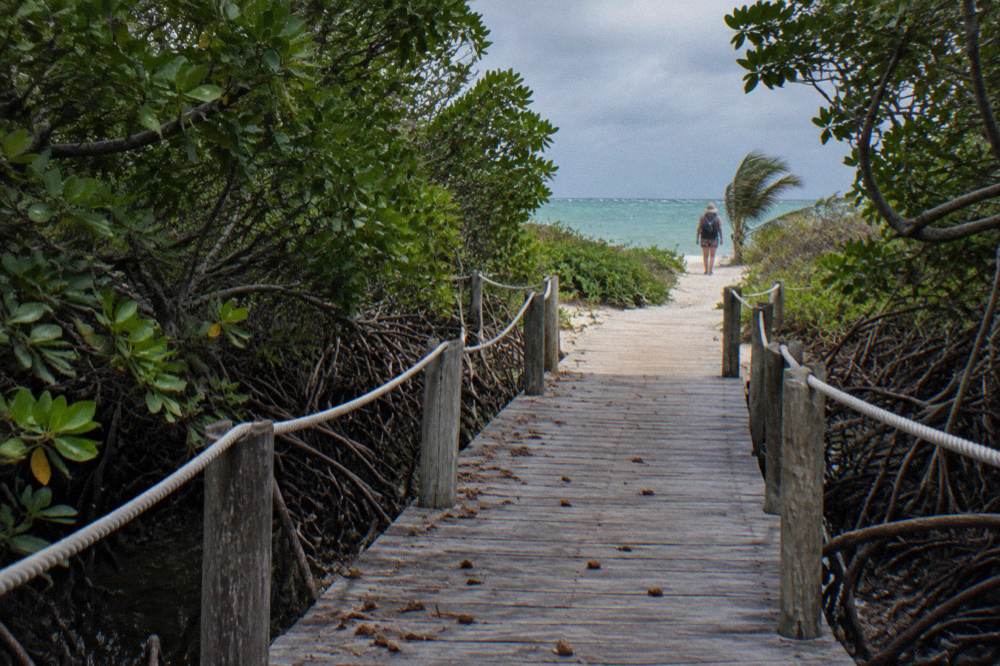
One more planning layer: January sits inside the reported frigatebird nesting window, roughly November to April, and the island's bird life is a genuine reason the trip is worth defending rather than shrugging off. The park is a sanctuary with well over 150 recorded species and colonies of magnificent frigatebird, brown pelican, double-crested cormorant, brown booby, royal tern, and the red-footed booby, described by operator sources as the only nesting colony in Mexico. The trails require a guide, which every authorized tour provides, and the visitor center, viewpoints and interpretive trails are the listed facilities on the island. If the port opens, a January day delivers all of that, with the winter dryness making the walking comfortable.
The management program behind these protections, including the roughly 200 visitors a day capacity, is published by CONANP at the sanctuary management program document, for readers who want the primary source on why access stays this tightly controlled.
Before the practical questions, here again are the three listings that handle winter-date planning most cleanly across price points and formats:
Common Questions About Isla Contoy In January
Who Decides If Boats Can Sail To The Island?
The Port Captaincy, the harbor authority, opens or closes the port each day based on conditions. When the port is shut, no authorized operator may run the crossing, regardless of a confirmed booking.
Do You Get A Refund If Wind Cancels Your Tour?
Listings generally offer a different date or a full refund when weather cancels the departure, but a partial change such as a skipped snorkel stop or a shortened Isla Mujeres visit is typically not grounds for a refund. Read the weather terms on the specific listing you book.
Which Months Are The Safest Bet For Calm Crossings?
February through April and November, the dry-season months outside the January Norte window, are the most consistently described as favorable. Hurricane season runs 1 June to 30 November, with the busiest stretch August to October.
Is The US$20 Fee The Same As The Park Entrance Fee?
No. The official CONANP entry fee is MXN 225 per person per day, published only in pesos. The US$20 or US$10 lines are the operators' own stated on-site charges, quoted per listing, and the two should never be conflated.
Can You Wear Sunscreen On The Island In Winter?
No. The official rule prohibits sunscreen and blocker in the protected area, and advises stopping use 30 minutes before arrival. Cover up with a rash guard and hat instead; do not rely on reef-safe or biodegradable labels.