Is Isla Mujeres Safe To Visit?
Isla Mujeres sits in Quintana Roo, a region under a Level 2 Exercise Increased Caution advisory, the same level as many popular destinations. Here is what that means in practice, plus ferry, beach and weather safety.
How Safe Is Isla Mujeres For Most Visitors?
Yes, Isla Mujeres is broadly considered safe for visitors who take ordinary travel precautions. The island sits in Quintana Roo, a region under a Level 2 "Exercise Increased Caution" advisory from the US State Department, the same level that applies to many popular destinations worldwide, and no island-specific warning or carve-out has been identified in recent updates. Tourist areas report no elevated alerts.
That advisory sentence deserves unpacking, because "Level 2" sounds alarming until you place it in context. The State Department grades destinations from Level 1 (exercise normal precautions) to Level 4 (do not travel), and Level 2 simply means: be careful, the way you would in any big tourist city. The advisory language for Mexico notes general crime risks nationwide, with isolated incidents possible in tourist and non-tourist areas alike, but it does not restrict travel to the main resort corridors of Quintana Roo, which include Cancun, the Riviera Maya and Isla Mujeres. Reporting through 2026 has kept the region at this same consistent level, and no advisory exists that is specific to the island itself.
Practically, the island's character works in its favor. Isla Mujeres is small, walkable in its downtown core, and oriented almost entirely around daytime tourism: the public beach at Playa Norte, the seafront promenade, the shops on Hidalgo Street, and the piers where boats leave for the surrounding reefs and for Contoy. Days here are spent on the sand, in the water, or on a boat, and the fresh guidance for the region is the standard list: avoid isolated areas at night, use reputable transport, and keep an eye on local news and embassy alerts. That is the same advice you would follow in nearly any beach destination in the world.
For many travelers the boat day is the point, and a guided product actually tightens the safety picture rather than complicating it. The Snorkel Day, 8 Hours, run by Ocean Tours Mexico from $179 per person and rated 4.8 from 829 reviews, bundles hotel pickup, a certified bilingual guide, lunch and drinks into one organized door-to-door day, with the listing stating a maximum of 50 travelers. The private speedboat version of the same day, the Private 8-Hour Snorkel Day from $840 per group, and the Punta Sam eco adventure from $140 per person, follow the same logic: fixed meeting points, vetted crews, and no improvised logistics in an unfamiliar place.
If you are weighing the island against other options, we compared the pair in a longer piece on Isla Mujeres versus Contoy as a day trip, and the safety conclusions are similar for both: book through established operators, keep to public areas after dark, and let weather decisions rest with the port authorities.
What Does The Travel Advisory Actually Say About Quintana Roo?
Quintana Roo, the state that contains Cancun, Isla Mujeres, Playa del Carmen and Tulum, holds a US State Department Level 2 rating, "Exercise Increased Caution." The rating cites general crime and kidnapping risks at the national level rather than anything specific to the island, and recent 2026 updates have left it unchanged. No higher advisory applies to the tourist zones.
It helps to read the advisory the way it is written: as a country-wide framework with state-level breakdowns, not as a review of individual towns. The Mexico advisory describes nationwide crime concerns and then grades each state. Quintana Roo's grade has been Level 2 through 2026, a level that travel risk maps place alongside numerous mainstream destinations. A check of the advisory tracker for the Cancun area shows the same picture: increased caution, no do-not-travel designation, no geographic restriction covering the island.
What that means for a visitor is unglamorous and effective. The practical guidance that circulates for the region reads: stay in populated and tourist-frequented areas, especially after dark; use reputable transportation rather than informal arrangements; keep valuables out of sight; monitor local news and any US Embassy alerts during your stay. Recent security operations in the region have been noted in local reporting and resolved without ongoing impact in the tourist corridors.
There is one caveat to attach. No dataset gives island-specific crime statistics, and we will not invent any. The reassurance here rests on the advisory structure (no carve-out, no elevated alert) plus the consistently tourist-centered character of the island, not on numbers nobody publishes. If your government's advisory differs from the American one, read both; countries weigh the same underlying reporting differently.
Is The Ferry From Cancun To Isla Mujeres Safe?
The Ultramar ferry crossing from Puerto Juarez to Isla Mujeres is a routine, high-frequency commuter route, reported at roughly 15 to 20 minutes each way, and no safety incident pattern has been identified in the sources reviewed. The crossing from Playa Tortugas in the Hotel Zone runs about 25 to 35 minutes. Both are standard passenger ferries with life equipment and crew.
Ferry safety questions usually hide a different worry: is the crossing rough, and is the terminal chaotic. On the first point, the sheltered channel between Cancun and the island is short, and the crossing is a daily commute for island residents and workers, not an open-sea passage. Treat the reported fare figure, about MXN 290 one way for an adult, as a secondary report and confirm current pricing on the operator's own search tool; add the reported environmental sanitation fee of roughly MXN 36 to 37 to your planning. We walk through the full logistics in how long the ferry from Cancun to Isla Mujeres takes, including the terminals and the frequent departures.
On the second point, the terminals are busy but orderly. The standard advice is to arrive around 30 minutes before departure, buy tickets from the official counters or machines, and keep your belongings with you, the same as at any urban transit hub. Open tickets are common, which removes the pressure of catching one specific sailing.
Two notes for Contoy plans. First, if your plan is a Contoy day that departs from Isla Mujeres itself, such as the Contoy Adventours snorkel trip from $166 per person or the National Park, Optional Snorkel from $136 per person, the ferry leg becomes part of your morning, and those listings have you reach the dock or office yourself rather than offering hotel pickup. Build in buffer time. Second, hurricane season runs from 1 June to 30 November per NOAA, and ferry sailings, like boat tours, follow the port authority's decisions; in early October 2026 a hurricane prompted temporary port restrictions around Isla Mujeres for smaller vessels, and ports reopened quickly once the system passed. Flexibility, not fear, is the right response. If the ferry timing and weather windows have you wondering whether the crossing pays off, our verdict on the Cancun to Isla Mujeres day trip weighs the effort against what the island genuinely offers.
Is It Safe To Swim And Snorkel Around Isla Mujeres?
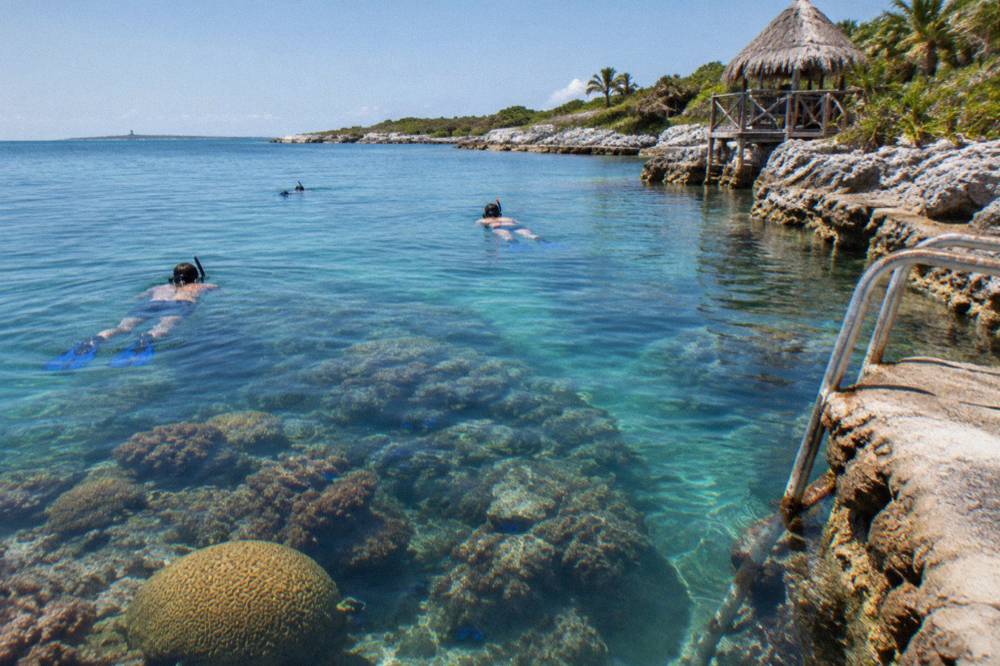
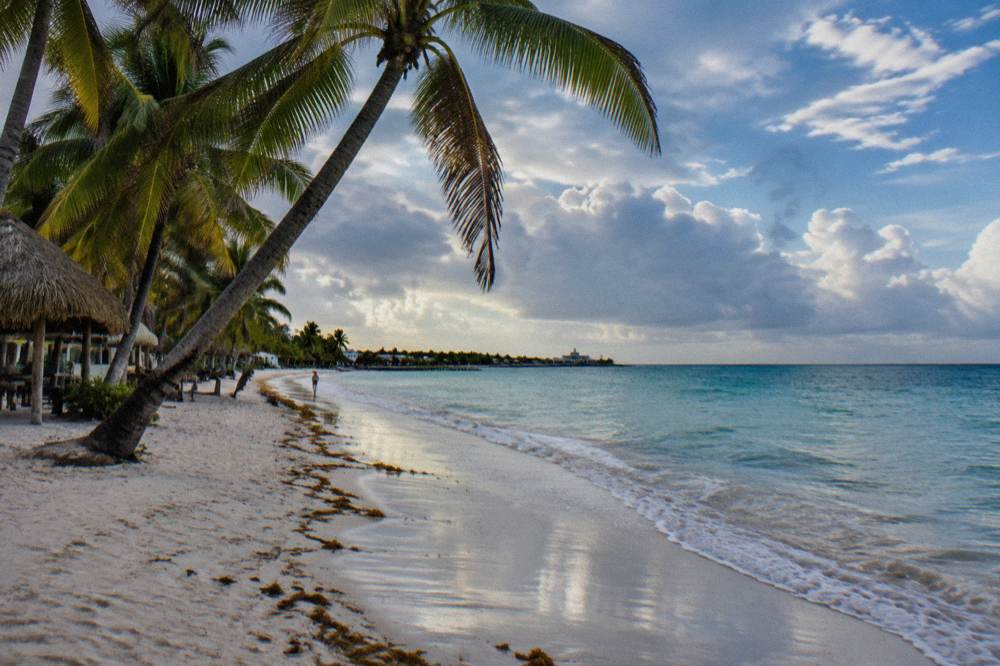
Swimming around Isla Mujeres is generally safe at the main public beaches, with Playa Norte the calmest and most family-friendly option, and snorkeling is typically done on guided stops at reef sites such as El Farito and Manchones. Conditions vary with wind and weather, and guides decide on the day whether a reef stop goes ahead.
The geography does most of the work. Playa Norte faces the sheltered channel side of the island, where the water stays shallow and gentle for a long walk out, which is why it is repeatedly described as the island's signature free swim. The seafront promenade and the town center cost nothing to enjoy either, as we detail in the free things to do on Isla Mujeres guide. The Caribbean side and the rocky points are different water: currents and surge can be stronger, and unguarded stretches deserve respect. Swim where others swim, and where a beach club or operator keeps an eye on the water.
Snorkeling introduces two safety layers worth naming. The first is equipment and supervision: on organized days, operators supply gear and life vests, and the official rule for the protected waters around Contoy is that a life vest is mandatory for snorkeling, a rule the CONANP park page states plainly. The second is weather: reef stops are conditional. The catamaran listings in the region say outright that a skipped snorkel stop is not grounds for a refund when weather forces the change, and the sailing day from Marina Xtabay lists its reef tax of US$20 per person paid at check-in alongside that weather language. Read the policy before you book, not after.
For the paid attractions, entry figures are thin and single-source: the turtle farm has a reported entry around MXN 30 and Punta Sur around MXN 120, both label-as-reported numbers rather than confirmed prices, and Garrafón is a paid reef park. None of these carry a safety flag in any source we reviewed; they simply are not free, despite sometimes being listed as such elsewhere.
Is Isla Mujeres Safe For Solo Travelers And At Night?
Standard regional advice applies: stay in populated areas after dark, use reputable transportation, and keep alcohol-fueled late nights anchored to the main strips rather than isolated stretches. There is no identified pattern of incidents targeting solo visitors, and no island-specific advisory exists. The island is a low-drama destination with a normal nightlife scene.
Downtown Isla Mujeres concentrates its evening life along Hidalgo Street and the waterfront, where restaurants and bars sit shoulder to shoulder and foot traffic stays steady. That concentration is the solo traveler's friend: you are never far from other people, taxis, or your hotel. Golf carts are the island's signature transport and rental prices are not verified in current data, so agree the rate before you roll; the same pre-agreed-price rule applies to taxis anywhere in Quintana Roo.
The night that worries people is usually the boat night, so settle that one directly: evening and sunset sails operate in the region, and the same port authority rules govern them as govern daytime departures. If a storm system is anywhere near, sailings pause. The Port Captaincy, not the operator's enthusiasm, decides whether boats leave the dock, and the official guidance for the whole area is that weather calls the schedule. On land, the rainy season runs May to October and the dry season November to April, and a climate dataset puts Cancun-area sea temperatures at about 25 to 29 C year-round, warm enough that evening beach walks are a normal activity rather than an adventure.
One more note for women traveling alone, since the question is asked often: the region's advisory language is not gendered, and the circulating practical tips are the universal ones, plus the sensible additions of sharing your itinerary, keeping your phone charged, and preferring accommodations in the town center where streets stay active. Beyond that, the island's small scale and family-run character do a lot of quiet work that statistics never capture.
Does A Guided Tour Make The Day Safer?
A guided day removes most of the decisions that carry real risk on a boat trip: who drives the vessel, whether conditions suit the crossing, where you swim, and how you get back. Of the tours on this site, ten of the fourteen include hotel pickup, meaning the van, marina, boat and guide chain is handled end to end, with certified crews and fixed meeting points.
Consider what a day on your own would ask of you: a ferry crossing on a specific timetable, a walk or taxi to an unfamiliar dock, a handshake agreement with a boat operator whose insurance you cannot check, and a self-assessed judgment on whether the sea state suits the run north to Contoy. The Contoy Adventours trip from Isla Mujeres, for instance, meets at its own office at 8:30 am on Av Juarez, a fixed address with a stated start time. The Cancun Sailing Catamarans day tells you to check in at Marina Xtabay from 9:30 for a 10:00 departure. Every step is named, timed and staffed in advance.
The group format also distributes the weather risk sensibly. Operators typically offer a different date or a full refund when conditions cancel a departure outright, which several tours state in their own words; what they do not refund is a skipped snorkel or a shortened Isla Mujeres stop when the port stays open but the wind picks up. That distinction is fair, and knowing it in advance removes the worst kind of surprise, the financial kind on a pier at noon.
| Listing | Operator | Price basis | Pickup | Rating and reviews |
|---|---|---|---|---|
| Snorkel Day, 8 Hours | Ocean Tours Mexico | from $179 per person | Hotel pickup, Playa del Carmen | 4.8 from 829 reviews |
| Private 8-Hour Snorkel Day | Ocean Tours Mexico | from $840 per group | Hotel pickup, Playa del Carmen | 4.9 from 144 reviews |
| Eco Adventure, 8 Hours | Contoy Adventures | from $140 per person | Hotel pickup, Cancun | 4.3 from 209 reviews |
| Sailing Catamaran, 7 Hours | Cancun Sailing Catamarans | from $139 per person | No hotel pickup, Marina Xtabay | 4.3 from 80 reviews |
| National Park, Optional Snorkel | Isla Fun Tours | from $136 per person | No hotel pickup, Black Pearl dock | 4.6 from 35 reviews |
A word on reading those numbers: a 4.6 from 35 reviews is a good score from a small pool, and a 4.3 from 209 reviews is a longer track record; read both numbers, not just the rating. The Private 8-Hour Snorkel Day carries the strongest rating, 4.9 from 144 reviews, and the Snorkel Day, 8 Hours is the most reviewed tour by a wide margin at 829.
What About Weather, Hurricanes And Sargassum?
Hurricane season runs from 1 June to 30 November, and October 2026 showed exactly how the system works: a hurricane brought temporary port closures around Isla Mujeres, boat tours paused, and ports reopened quickly once the system moved through. Sargassum in 2026 monitoring runs generally lower on the northern islands, including Isla Mujeres and Contoy, than on mainland beaches to the south.
None of that is a reason to avoid the island; it is a reason to book with cancellation terms you have actually read. The regional norm, stated across operators, is a different date or a full refund when weather cancels a departure, and no specific safety incident on a Contoy or Isla Mujeres tour surfaced in any source we reviewed. The pattern that matters operationally is the "Norte" wind event: CONANP itself recommends visiting Contoy at any time of year except January, when northerly winds make a port opening unlikely, and the same winds can scrub winter boat days around Isla Mujeres. Winter visitors should hold itineraries loosely.
Sargassum deserves clear framing rather than the panic version. The seaweed arrives on Caribbean currents roughly May through October, and monitoring through 2026 has repeatedly shown the northern islands, Contoy, Holbox and parts of Isla Mujeres, sitting cleaner than the exposed mainland hotspots, though satellite readings vary with cloud cover and no beach is promised clean. The CONANP park page is the authoritative source for rules on the protected island itself, and its position on protection products is stricter than most blogs report: no sunscreen or blocker at all in the protected area, with the management program asking visitors to stop applying 30 minutes before arrival. Shade, a rash guard and a hat are the compliant answers, and that rule protects the reef you came to see.
For trip timing generally, the dry season months of November to April bring calmer seas and lower humidity, while summer brings warmer water and the reported whale shark season offshore, roughly mid-May to mid-September with a peak in July and August, on separate dedicated trips that no Contoy tour includes. If those summer months call to you, the country advisory page plus a live sargassum map are the two checks worth making the week you travel.
What Should You Actually Do Differently After Reading This?
Almost nothing dramatic: book organized days with read cancellation terms, keep evening plans on the busy strips, pre-agree taxi and cart prices, bring reef-compliant sun protection, and check the advisory plus a sargassum map the week you fly. The island does not require a special safety strategy, only the ordinary discipline that any unfamiliar destination earns.
The checklist below compresses the guidance into the decisions a real trip involves. Nothing on it is exotic, and that is the finding: the destination's risk profile is dominated by ordinary travel risks and weather, not by anything unique to the island.
| Situation | The sensible move |
|---|---|
| Booking a boat day | Choose a listing with hotel pickup and stated weather-cancellation terms; read the refund language on skipped stops |
| Getting to the island | Ferry from Puerto Juarez, ticket from official counters, arrive about 30 minutes early |
| Evenings out | Stay around Hidalgo Street and the waterfront; reputable transport back to your room |
| Sun protection | No sunscreen in protected areas; rash guard, hat and shade instead |
| Season planning | Avoid January for boat days if your dates are flexible; hold summer itineraries loosely |
| Money matters | Carry cash for on-site fees, several listings state US$20 per person dock or park fees paid on the day |
Here is where this article's limits are. There are no published island-level crime statistics, so nobody can rank Isla Mujeres against a database. What we can report is the advisory structure, the absence of any elevated or island-specific warning, the ordinary-precautions guidance that circulates for the region, and the weather mechanics that genuinely do shape boat days here. For a wider read on whether the island earns its slot in your itinerary, see our take on Isla Mujeres as a day trip from Cancun, and for the planning side, Isla Contoy Tours compares every boat day that combines the two islands.
The organized option remains the simplest way to see both islands with the safety questions pre-answered: a certified guide, a vetted boat, a stated itinerary and a crew whose job is the judgment calls. The listings below state their own maximum group sizes and meeting points, so read those lines before you book.
Common Questions About Isla Mujeres Safety
Is Isla Mujeres Safer Than Cancun?
No ranking is possible, because no island-level crime statistics are published. Both fall under the same Quintana Roo advisory, and both are tourist-centered areas where standard precautions apply. The island's small scale and walkable downtown simply reduce the number of unfamiliar situations.
Is The Ferry Crossing To Isla Mujeres Dangerous?
No. The Puerto Juarez crossing is a short, high-frequency commuter run, reported at about 15 to 20 minutes, run by Ultramar with standard passenger-vessel equipment. Arrive about 30 minutes early and buy tickets from official counters.
When Should I Avoid Visiting?
January is the month to treat with caution for boat days, since "Norte" winds make port openings unlikely; CONANP says so directly for Contoy. Hurricane season runs 1 June to 30 November, so summer travelers should hold itineraries loosely and read cancellation terms.
Is It Safe To Swim At The Beaches?
Yes at the main public beaches, especially the calm, shallow Playa Norte. The open Caribbean side and rocky points can carry stronger currents, so swim where others swim and where a beach club or operator watches the water.
Do I Need A Guide For Safety Reasons?
A guided day shifts the risky decisions, the vessel, the crossing judgment and the swim spots, onto a certified crew. Ten of this site's fourteen listings include hotel pickup, which also removes informal transport from your day.